 WhatsApp
 sales@unpchemicals.com
 +86 16638830202
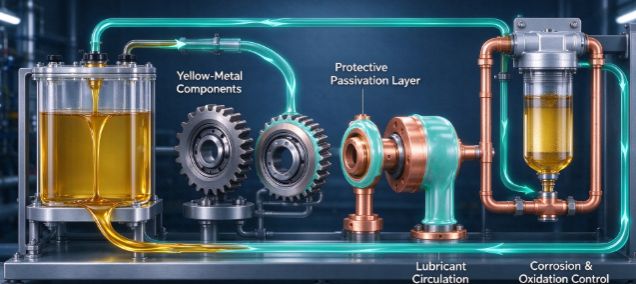
Humidity, moisture, acidic impurities and salt represent persistent threats to metallic components of industrial and construction machinery. When water vapour and corrosive agents invade lubrication systems, metalworking fluid circuits or enclosed equipment cavities, electrochemical corrosion readily occurs on ferrous and non-ferrous surfaces, resulting in pitting, component degradation, equipment failure and increased maintenance expenditure. As industrial equipment moves toward higher reliability and extended service intervals, formulators require robust, multi-system-compatible rust-inhibiting chemistries. To address these industry-wide challenges, UNPChemicals has developed the complete CMET® rust and corrosion-inhibitor portfolio, covering alkenyl succinic acid, imidazoline and carboxylic-acid derivative platforms. These serve as drop-in alternatives to commercial grades from BASF and LANXESS, delivering flexible technical options for formulation development across diverse industries.
What Are Rust Inhibitors
Rust inhibitors are chemical compounds dosed into lubricants, coolants and working fluids, or applied as surface coatings onto metal substrates. Analogous to paraffin inhibitors that modify wax crystal morphology rather than removing paraffin components from crude oil: rust inhibitors do not fully eliminate moisture and corrosive species from the environment. Instead, they act at molecular level to block contact between corrosive media and metal substrates. By forming barrier protective films at metal interfaces, they suppress anodic and cathodic electrochemical corrosion reactions, slow or prevent metal rusting, extend component service life and preserve mechanical equipment performance.
Based on working mechanisms, rust inhibitors fall into four major categories: anodic inhibitors, cathodic inhibitors, mixed-type inhibitors, and vapour-phase inhibitors (VPI) for sealed or packaged metal parts, each optimised for distinct service conditions.
The Hidden Cost of Insufficient Corrosion Protection
Formulations lacking properly selected rust-inhibiting components trigger cascading operational and financial losses. Under humid and salt-spray conditions, equipment housings, pipelines, pumps and valves suffer rust and pitting. Corrosion by-products generate sludge and deposits inside lubricant and hydraulic-fluid systems, abrading precision moving pairs. Work-pieces experience in-process flash-rust during handling and storage after metal-working operations, leading to direct part rejection. Marine and off-road hardware undergoes accelerated ageing from salt-laden atmospheres. Corrosion within cooling circuits causes pipe blockage and degraded heat-exchange efficiency. Frequent component replacement, workpiece scrap and unplanned downtime drive up full-lifecycle operating costs. Therefore metal corrosion protection is an essential consideration for automotive, industrial, marine and metal-working formulation design.
How CMET® Rust Inhibitors Work
CMET® series consists of three dominant chemical families: alkenyl succinic-acid derivatives, imidazolines and N-acyl sarcosinate salts, each with differentiated mechanisms.
· Alkenyl succinic-acid derivatives: Polar molecular groups adsorb onto metal surfaces in oriented arrangement, with non-polar hydrocarbon chains pointing outward, building dense water-repellent oil films that isolate metal substrates from moisture and acidic contaminants for long-term rust protection in oil-borne systems.
· Imidazoline-based grades: Nitrogen-containing heterocyclic structures exhibit strong surface adsorption onto metals. They combine acid-neutralising, water-displacing and emulsifying properties, well-suited for lubricant and metal-working systems with free water contamination.
· N-acyl sarcosinate salts: Synergistic adsorption from carboxylate and amine-salt moieties delivers outstanding rust performance. Certain grades are qualified for food-contact-safe lubricant formulations and show pronounced performance boost when blended with imidazoline products.
UNPChemicals CMET® Full-Range Rust & Corrosion Inhibitor Portfolio
Alkenyl Succinic Acid Derivatives
· CMET T746 (CAS 29658-97-7): Dodecylene succinic acid, oil-soluble ashless rust inhibitor. Forms robust protective oil films for comprehensive metal anti-rust and anti-corrosion performance.
· CMET T747A: Dodecenylsuccinic acid half-ester rust inhibitor. Features low acid value, good fluidity and oil solubility; forms dense protective oil layers against metal rusting.
· CMET T747B: Fully-esterified dodecenyl succinate derivative with reduced acid value. Balances metal-surface activity and oil solubility for industrial lubricant applications.
Imidazoline-Based Rust Inhibitors
· CMET AO (CAS 51023-21-3): Oleic acid imidazoline, multi-functional additive combining corrosion inhibition, water-displacing and emulsifying performance.
· CMET T703: Heptadecenyl imidazoline succinate, neutralised product of alkenyl imidazoline and dodecenyl succinic acid. Ashless, oil-soluble and provides excellent acid-neutralising capacity.
N-Acyl Sarcosinate Series
· CMET SO (CAS 110-25-8): N-acyl sarcosine-type corrosion inhibitor for lubricating oils, greases and fuel oils. Delivers synergistic improvement when compounded with CMET AO and compatible with food-grade lubricant formulas.
· CMET T711: Octadecylamine N-oleoyl sarcosinate (T711), high-efficiency oil-soluble rust preventive. Yellow waxy solid at ambient temperature, melts to amber oily liquid upon heating; insoluble in water yet fully oil-soluble. Designed for hydraulic oils, circulating oils, instrument oils and rust-preventive oils.
Key Properties of High-Performance Rust Inhibitors
Following the unified evaluation framework applied across paraffin inhibitors, friction modifiers, metal deactivators and EP/AW additives, premium rust inhibitors must satisfy four core criteria:
1. High efficiency at low treat rates: Deliver reliable anti-rust performance at economical dosage to optimise formulation cost.
2. Broad formulation compatibility: Fully compatible with antioxidants, EP/AW additives, metal deactivators and other common lubricant additives; stable within mineral, hydro-cracked and synthetic base oils without antagonistic side-reactions.
3. Resilience against harsh environments: Preserve film-forming and protective performance under high-humidity, salt-spray and weakly acidic operating conditions; selected grades provide significant acid-neutralising capability.
4. Convenient industrial handling: Liquid grades support easy pumping and blending; solid grades feature suitable melting ranges for large-scale additive plant production.
Application Scope & Product-Selection Guidance
CMET® rust inhibitors serve multiple industry segments:
1. Lubricants: Engine oils, gear oils, hydraulic fluids, circulating oils and greases for metal-component protection.
2. Metalworking fluids: Protect cutting tools and machined work-pieces against flash-rust during processing, storage and transportation.
3. Automotive & cooling systems: Antifreeze and coolant formulations to safeguard radiators, water pumps and related hardware.
4. Marine industry: Marine lubricants and heat-exchange equipment resisting seawater-driven salt-spray corrosion.
5. Paints & rust-preventive oils: Surface-protection coatings for steel structures extending component service life.
Formulators should evaluate end-use scenarios, metal substrate types, humidity-salt-spray exposure, fluid medium and regulatory safety constraints:
· Alkenyl succinic-acid series (T746 / T747A / T747B): Preferred for lubricants and rust-preventive oils where water-repellent barrier-film anti-rust performance is prioritised.
· Imidazoline series (CMET AO / T703): Deploy for systems contaminated with free water or acidic species requiring acid-neutralising and water-displacing functions.
· N-acyl sarcosinate salts (CMET SO / CMET T711): For synergistic blending, food-grade-compliant lubricants or precision-instrument rust-preventive oil systems.
For equipment exposed to high-humidity, salt-spray and acidic contamination, rust and corrosion inhibitors constitute critical formulation components ensuring metal-part reliability. The CMET® portfolio delivers diversified chemistries including alkenyl succinic-acid, imidazoline and carboxylic-acid derivatives, offering flexible molecular building blocks for lubricant formulators. Appropriate grade selection effectively suppresses metallic rusting, mitigates equipment-failure risks, reduces component wear and lowers total maintenance costs for end-users.
Contact the UNPChemicals technicalsales team for datasheets, formulation recommendations and custom-grade support for your specific projects.