 WhatsApp
 sales@unpchemicals.com
 +86 16638830202
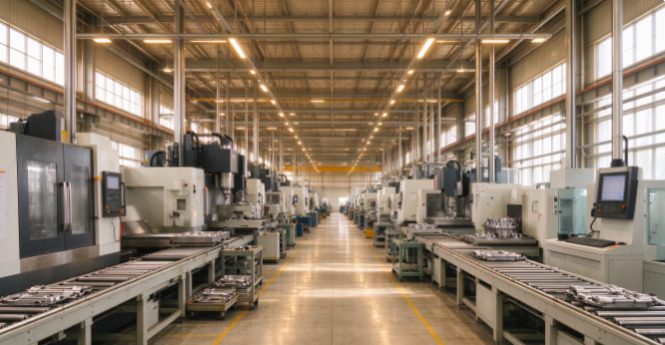
Cutting, grinding, milling and turning impose severe combined thermal, friction and corrosive loads on tools and work-pieces. Even well-formulated base fluids cannot independently satisfy comprehensive requirements including boundary lubrication, high-load bearing capacity, workpiece anti-corrosion and long-service-life stability. Without targeted functional additives, operators suffer accelerated tool wear, poor workpiece surface finish, in-process flash-rust and rapid fluid deterioration, raising production reject rates and overall manufacturing costs. As modern machining operations pursue higher processing precision, extended fluid service cycles and diversified water-based / oil-based formulation routes, formulators require matched additive packages for metalworking-fluid systems. UNPChemicals delivers a complete portfolio including OSUM® oiliness agents, CSUM® metal corrosion inhibitors and PMET® lubricity & extreme-pressure additives, compatible with neat cutting oils, emulsified fluids and water-dilutable industrial process fluids.
What Are Metalworking-Fluid Additives
Metalworking-fluid additives are specialty chemical compounds that tailor the performance of cutting, grinding and forming fluids. Analogous to paraffin inhibitors modifying wax-crystal morphology without removing paraffin from crude oil: metalworking-fluid additives do not replace the cooling or dissolving properties of base fluid media. Instead they act at tool-workpiece interfaces and within the fluid bulk to enhance lubricity, load-carrying capacity and corrosion resistance.
Major categories of metalworking-fluid additives comprise lubricity additives, corrosion inhibitors, biocides, extreme-pressure additives and emulsifiers, each addressing distinct performance bottlenecks for oil-based, semi-synthetic and fully-synthetic machining systems.
The Hidden Cost of Inadequate Additive Design for Machining Fluids
Improper or insufficient additive packages trigger cascading manufacturing losses. Insufficient lubricity and extreme-pressure performance cause excessive tool abrasion, built-up-edge formation and poor surface quality of machined parts. Weak corrosion-inhibiting properties bring flash-rust on ferrous and non-ferrous workpieces during intermediate storage. In water-dilutable systems, missing emulsifier or biocide control leads to emulsion breakdown, bacterial propagation, foul odour and premature fluid failure. All these issues increase tool consumption, workpiece scrap rate, fluid-replacement frequency and unplanned production downtime. Consequently, carefully selected additive chemistry is critical for stable, cost-effective metal-processing workflows.
How Metalworking-Fluid-Specific Additives Function
· Lubricity / Oiliness agents: Adsorb onto metal contact interfaces, forming low-shear boundary films to reduce friction under moderate load conditions and improve surface finish during cutting and grinding.
· Extreme-pressure additives: Under high contact pressure and frictional heat, undergo tribochemical reactions to generate protective surface films, preventing welding, galling and seizure at tool-workpiece contact zones.
· Metal corrosion inhibitors: Adsorb or chelate on metal surfaces, constructing protective barrier layers to suppress flash-rust and tarnish for ferrous, copper-series and aluminium work-pieces in both oil-borne and aqueous environments.
· Emulsifiers & multi-functional phosphate esters: Stabilise oil-water dispersed phases for semi-synthetic fluids while simultaneously contributing lubricity, anti-wear and dispersing performance.
UNPChemicals Full-Range Metalworking-Fluid Additive Portfolio
CSUM® Series Metal Corrosion Inhibitors
· CSUM 4200 (CAS 80584-88-9): Tolyltriazole derivative, water-soluble copper corrosion inhibitor / metal deactivator, alternative to solid benzotriazole and methylbenzotriazole for water-glycol systems.
· CSUM 5202 (CAS 55906-42-8): Fully water-soluble thiadiazole derivative with low viscosity and good extreme-pressure properties. Designed for fully-synthetic and semi-synthetic metalworking fluids, especially suitable for wire-drawing processes.
· CSUM 8150: Siloxane ketone oligomer. Delivers effective corrosion inhibition for aluminium and soldering-tin substrates within aqueous-based fluid environments.
PMET® Series Lubricity & Extreme-Pressure Additives
· PMET PE1650 (CAS 68909-67-1): Oleyl polyether phosphate ester, multi-functional environmentally-friendly surfactant integrating lubrication, EP-anti-wear, corrosion-inhibition, emulsification and dispersion performance for cutting, rolling and grinding fluids.
· PMET PE1690 (CAS 73038-25-2): Sulfur-free phosphorus-based ash-forming EP-anti-wear additive. Provides excellent load-bearing and lubricating properties plus moderate rust protection for lubricants, greases and neat metalworking fluids.
Key Properties of High-Performance Metalworking-Fluid Additives
Following the unified evaluation framework applied across all additive families, premium metalworking-fluid additives must satisfy four core benchmarks:
1. High efficiency at low treat rates: Realise target lubricity, EP-protection and anti-corrosion performance under economical dosage without polluting workpiece surfaces.
2. Broad formulation compatibility: Exhibit good compatibility with emulsifiers, biocides and other co-additives; adapt to neat-oil, semi-synthetic and fully-synthetic aqueous systems without emulsion destabilisation.
3. Thermal & chemical stability: Retain functionality under machining-generated heat and variable pH conditions typical for water-based metalworking fluids.
4. Process-friendly handling: Liquid-form grades support convenient pumping, metering and blending for large-scale fluid manufacturing.
Application Scope & Product-Selection Guidance
UNPChemicals metalworking-fluid additives serve multiple machining-industry segments:
1. Cutting & turning: Improve tool life and surface quality for general-purpose cutting-fluid formulations.
2. Grinding: Reduce workpiece burning via enhanced boundary-lubrication performance in grinding fluids.
3. Wire-drawing & rolling: Offer high load-bearing capability for deformation-type metal-processing fluids.
4. Water-based cleaning agents: Provide multi-metal corrosion-inhibition for industrial aqueous cleaning systems.
Formulators should evaluate fluid type (neat-oil / semi-synthetic / fully-synthetic), workpiece-metal types, machining load intensity and local regulatory requirements:
· Choose CSUM series when multi-metal anti-tarnish and aqueous-phase metal-deactivation performance is prioritised.
· Deploy PMET PE1650 for multi-purpose phosphate-ester surfactant needs combining lubricity, emulsification and EP-performance.
· Select PMET PE1690 for phosphorus-based extreme-pressure scenarios requiring robust load-carrying capacity.
Summary
Modern metalworking-fluid performance depends heavily on functional additive systems beyond simple base-fluid cooling capacity. Lubricity, extreme-pressure and multi-metal corrosion-inhibiting additives jointly mitigate tool wear, workpiece flash-rust and premature fluid degradation. UNPChemicals CSUM® and PMET® additive series supply flexible molecular building-blocks for formulators to optimise neat-oil, semi-synthetic and fully-synthetic machining fluids, lowering scrap ratios and comprehensive production costs for end-users.
Contact UNPChemicals technical-sales team for datasheets, formulation recommendations and custom-grade support for your metalworking-fluid projects.