 WhatsApp
 sales@unpchemicals.com
 +86 16638830202
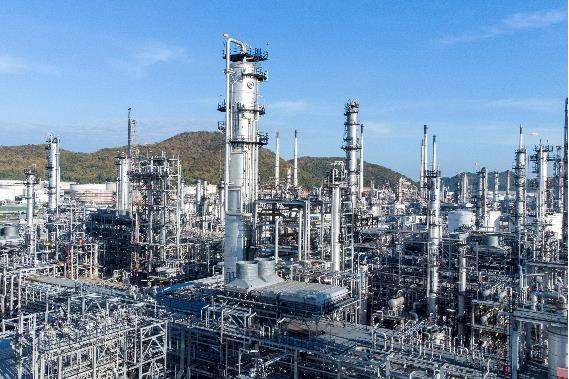
Research Progress in Development and Application of High-Efficiency Demulsifiers for Complex Crude Oil Emulsions
What is a demulsifier?
Demulsifier is a specialized chemical or material designed to break down stable crude oil emulsions (such as W/O, O/W, or multiple emulsions) formed during oil production, transportation, or processing. These emulsions—stabilized by interfacially active substances (e.g., asphaltenes, resins, wax crystals) and factors like interfacial tension, viscoelastic interfacial films, and interfacial charge—can reduce production efficiency, cause equipment corrosion, and lead to environmental pollution.
Demulsifiers function by disrupting the stability of emulsion systems through mechanisms including displacing natural surfactants at the oil-water interface, neutralizing interfacial charges, bridging dispersed droplets to promote coalescence, or altering the phase properties of emulsions. Common types include polymer demulsifiers (e.g., polyethers, polyquaternary ammonium salts), biomass-based demulsifiers (derived from lignin, tannic acid, lotus leaves, etc.), ionic liquid demulsifiers, and nanomaterial demulsifiers (e.g., magnetic nanoparticles, carbon-based materials).
The core goal of demulsifiers is to achieve efficient oil-water separation, thereby improving oilfield production efficiency, reducing operational costs, and mitigating environmental risks. High-performance demulsifiers are typically characterized by strong universality, high demulsification efficiency, low dosage, environmental friendliness, and tolerance to harsh conditions (e.g., high temperature, high salinity).
Abstract
1. Types and Stabilization Mechanisms of Crude Oil Emulsions
1.1 Basic Types of Crude Oil Emulsions
Oil-in-Water (O/W) emulsions are produced by highly hydrophilic molecules.
Water-in-Oil (W/O) emulsions form in the presence of hydrophobic molecules, commonly encountered in heavy oil transportation, asphalt foam processing, and desalination before refining. Asphaltenes, waxes, resins, solids, naphthenes, aliphatics, and aromatic acids act as natural emulsifiers to form thin films, stabilizing dispersed droplets and preventing coalescence.
W/O/W emulsions: The dispersed phase is a W/O emulsion; the inner aqueous phase (W₁) and outer aqueous phase (W₂) are miscible due to similar polarity.
O/W/O emulsions: O/W emulsion droplets are re-dispersed in an outer oil phase, forming a system with oil as both the outer and inner phases. The dual interface films (O/W and W/O) divide the system into three immiscible regions (oil/water/oil), enabling encapsulation and controlled release of oil-soluble active ingredients for enhanced stability.
1.2 Stabilization Mechanisms of Crude Oil Emulsions
Oil-water interfacial tension: Higher interfacial energy leads to poorer emulsion stability.
Oil-water interfacial film: Emulsifiers in emulsions not only reduce interfacial tension but also strongly adsorb at the oil-water interface to form a viscoelastic interfacial film.
Interfacial charge: Ionization of molecules at the interface during Brownian motion of droplets leads to the formation of an electric double layer in the continuous phase. Repulsive forces between overlapping double layers prevent droplet coalescence, stabilizing the emulsion.
2. Performance and Application Progress of Demulsifiers
2.1 Polymer Demulsifiers
2.1.1 Polyether Demulsifiers
Traditional demulsifiers, mostly positive-phase polyether demulsifiers for W/O emulsions, have played a crucial role in oilfields. Compound AP series polyether demulsifiers have been successfully applied in offshore oilfields, achieving a dehydration rate of 90%, ensuring normal production and meeting on-site needs. For oil-containing sludge systems, DS-1, a demulsifier for dirty oil with high mechanical impurity content, was developed by compounding DS series polyether demulsifiers with reverse demulsifiers. Laboratory evaluations showed that adding 0.4% DS-1 to dirty oil (31% water content in the upper layer of the settling tank and 6.7% centrifugal sediment) from Daqing Oilfield’s Bei’er United Station resulted in a dehydration rate of 97% and a top oil water content of 0.6% after 4.5 hours at 50°C. However, traditional polymer demulsifiers have poor universality, with some being toxic and non-degradable.
Table 1 Application of Traditional Polyether Demulsifiers
| Demulsifier | Applicable Oil-Water System | Dehydration Efficiency (DE)/% | Optimal Demulsification Conditions | Advantages | Disadvantages |
|---|---|---|---|---|---|
| BP Series | Shengli Oilfield | >90 | 50°C, 3h | Good dehydration effect | High requirements for molecular weight and temperature; insignificant effect if not met |
| AP Series | Bohai Oilfield, East China Sea Oilfield | 90 | 1.25% water dispersion system, 25mg/L dosage | Fast dehydration rate, sharp oil-water interface, clear dehydrated water | Environmental pollution |
| SD Demulsifier | Tahe Oilfield heavy crude oil | 89 | 100mg/L dosage, 70°C | ||
| DS-06/DL11 (positive-reverse compound) | Hohhot Refinery oil-containing sludge | 95 | 180mg/L dosage, 30:10 ratio | Strong specificity, significant industrial application effect | |
| DS-1 (compounded) | Daqing Oilfield Bei’er United Station dirty oil with high mechanical impurities | 97 | 4.5h, 50°C |
2.1.2 Polyquaternary Ammonium Salt Demulsifiers
2.1.3 Dendritic Macromolecular Demulsifiers
2.1.4 Copolymer Demulsifiers
2.2 Biomass-Based Demulsifiers
Biomass is the most abundant source for manufacturing sustainable polymers and renewable chemicals. Using lignin as a substitute for petroleum-derived chemicals in aromatic polymers is an economically viable strategy. In recent years, biomass materials such as cellulose, anthocyanins, tannic acid, lignin, cardanol, lotus leaves, rice husks, and seaweed have been applied in oilfields, showing good demulsification performance for aged oil at offshore platforms. Amid the "dual carbon" goal, biomass-based demulsifiers hold great potential due to their practicality, green properties, high efficiency, and relatively simple synthesis.
Table 2 Demulsification Performance Comparison of Biomass-Based Demulsifiers
| Biomass Raw Material | Demulsifier | Applicable Emulsion Type | DE/% | Optimal Demulsification Conditions | Advantages | Disadvantages |
|---|---|---|---|---|---|---|
| Anthocyanins | PC9015 | Bohai Oilfield aged oil emulsion | 84.6 | 70°C, 2h, 100mg/L | Good dehydration performance, high practicality; suitable for crude oil and aged oil at offshore platforms | Severe wall adhesion |
| Epigallocatechin Gallate | EGA603 | Bohai Oilfield aged crude oil emulsion | 94.3 | 70°C, 100min, 100mg/L | Clear oil-water interface, slight wall adhesion; natural polyphenol-based, economical and green | Slight wall adhesion |
| Tannic Acid | TAPA9920 | South China Sea Oilfield aged oil emulsion | 97.9 | 70°C, 40min, 100mg/L | Replaces petroleum-derived nonylphenol surfactants | Complex synthesis |
| Cardanol | DECA | Arabian heavy crude oil | 100 | 60°C, 40min, 100mg/L | Complex synthesis, still in laboratory stage | |
| Lignin | Lignin-silica high-efficiency membrane | O/W system | 98.6 | Complete contact with filter paper; separation completes when colored oil is fully filtered | Significant effect, simple separation | Laboratory stage |
| Lotus Leaves | HLLF | Changqing Oilfield | 88.17 | 1000mg/L, 70°C, 90min | Clear oil-water interface, transparent water | Narrow applicability, higher dosage than similar products |
| Rice Husks | RHC | W/O system | 96.99 | 600mg/L, 70°C, 80min | Wide pH range, good salt tolerance | Narrow applicability, higher dosage than similar products |
| Seed Extract | DEMLOCS | Aged oil emulsion | 88 | 45°C, 24h, 2000mg/L | Moderate temperature, simple hydrothermal synthesis |
2.2.1 Phenol-Amine Modified Biomass-Based Demulsifiers
2.2.2 Lignin-Based Demulsifiers
2.2.3 Micro-Nano Biomass-Based Demulsifiers
2.3 Ionic Liquid Demulsifiers
2.3.1 Basic Structure of Ionic Liquids
2.3.2 Performance Characteristics of Ionic Liquids
The following table compares the performance of ionic liquids and traditional demulsifiers:
Table 3 Performance Comparison Between Ionic Liquids and Traditional Demulsifiers
| Performance | Ionic Liquids | Traditional Demulsifiers (Surfactants) |
|---|---|---|
| Interfacial Tension | Surfactant ionic liquids can reduce interfacial tension to 10 mN/m; improving surface activity and considering salinity synergy is necessary | Can reduce IFT to 10⁻²~10⁰ mN/m, effective for oil-water separation |
| Viscosity | Tunable via branching modifications | Cannot achieve high viscosity in aqueous solutions |
| Stability | Thermally stable at high temperatures; no decomposition during long-term storage | Unstable at high temperatures |
| Toxicity | Low toxicity, environmentally friendly | Some alkylphenol surfactants are highly toxic and non-degradable |
| Recyclability | Recyclable via multiple methods (liquid-liquid extraction, distillation, etc.) | Non-recyclable |
2.3.3 Application of Ionic Liquid Demulsifiers
Compared to traditional demulsifiers, ionic liquids offer higher stability and simpler synthesis. ILs derived from alginic acid, rosin acid, and waste plastics have recently been applied to heavy oil demulsification, achieving up to 100% efficiency. Modification of recyclable magnetic nanomaterials with ILs enables recyclability. Despite successful oilfield applications, ILs face limitations in interfacial tension reduction, toxicity, and separation, requiring further improvements.
Table 4 Application Effects of Ionic Liquid Demulsifiers
| Ionic Liquid | Cation | Anion | Emulsion Type | Dosage/mg·L⁻¹ | DE/% | Interfacial Tension Reduction | Conclusion |
|---|---|---|---|---|---|---|---|
| mim NTf₂ (n=10, 12, 14) | Imidazolium | Bis(trifluoromethylsulfonyl)imide | SW/O | 100~3500 | 93.6~100 | 77~95 | For hydrophilic ILs, increased dosage and alkyl chain length cause aggregation, leading to poor demulsification and increased IFT |
| mim PF₆ (n=10, 12, 14) | Imidazolium | Hexafluorophosphate | SW/O | 500~3500 | 71.25~86.25 | 54~81 | |
| mim Cl (n=10, 12, 14) | Imidazolium | Chloride | SW/O | 500~3500 | 76.25~93.75 | 64~80 | |
| TNPy | Aminopyridinium | Bromide | W/O | 250~1000 | 100 | 24 | Alkyl chain length, dosage, and RSN value affect demulsification activity; nonyl and tetradecyl chain TCPyILs outperform hexadecyl counterparts; 100% efficiency for W/O emulsions (50/50, 30/70, 10/90 v/v) even at low concentrations |
| TTPy | Aminopyridinium | Bromide | W/O | 250~1000 | 100 | 26.5 | |
| TCPy | Aminopyridinium | Bromide | W/O | 500 | 100 | 26 | |
| Seaweed-based ILs | Ammonium | Bromide | SW/O | 1000 | 100 | BH-ALG and BN-ALG exhibit good interfacial tension reduction; BH-ALG has higher surface activity due to longer alkyl chains | |
| Rosin acid (AA)-based ILs | Imidazolium | Iodide | SW/O | 250~1000 | 100 | 100% dehydration rate for 90:10 crude oil-brine emulsions; enhanced hydrophobicity from polyglycolide rings | |
| Waste plastic-derived ILs | Ammonium | Chloride | W/O | 1000 | 94 | 34.5 | BHET from PET glycolysis reacts with thionyl chloride to form BCET, which is quaternized with HEOD/DOAD to produce amphiphilic GILs (HEOD-IL, DOAD-IL); HEOD-IL has a lower CMC; alkyl chains facilitate diffusion to replace rigid asphaltene films |
| IL-modified magnetic nanocomposites | Vinylimidazolium | Bromide | W/O | 1000 | 99.9±0.3 | 18±0.1 | 99.9±0.3% dehydration rate at 70°C for 2h; interfacial tension reduced from 20.0±0.1 to 1.9±0.1 mN/m; recyclable via external magnet for 4 cycles (89% efficiency) |
2.4 Nanomaterial Demulsifiers
2.4.1 Magnetic Nanoparticle Demulsifiers
2.4.2 Carbon-Based Demulsifiers
3. Demulsification Mechanisms
3.1 Demulsification Mechanisms for W/O Emulsions
3.1.1 Displacement Mechanism (EO/PO Copolymer Demulsifiers)
3.1.2 Bridging Replacement Mechanism (Micro-Nano Biomass-Based Demulsifiers)
3.1.3 Flocculation-Coalescence Mechanism (Gemini Ionic Liquid Demulsifiers)
3.1.4 Competitive Adsorption Mechanism (Biomass-Based Demulsifiers)
3.2 Demulsification Mechanisms for O/W Emulsions
3.2.1 Phase Inversion Mechanism (Dendritic Reverse Demulsifiers)
3.2.2 Interfacial Charge Neutralization Mechanism (Oligomeric Quaternary Ammonium Salt Demulsifiers)
3.2.3 Counterion Mechanism (Ionic Liquid Demulsifiers)
3.2.4 Wetting-Solubilization Mechanism (Nanoparticle Demulsifiers)
3.3 Analysis Methods for Demulsification Mechanisms
Atomic Force Microscopy (AFM) and Surface Force Apparatus (SFA): AFM quantifies interactions between water droplets in O/W/W/O emulsions (with/without asphaltenes); SFA measures surface forces (e.g., van der Waals, electric double layer, hydration, hydrophobic, steric, cation-π, anion-π forces) to analyze the role of interfacially active substances.
Interfacial Tension (IFT) Measurement: IFT, a key indicator of emulsion stability, is calculated using the Young-Laplace equation:
ΔP = -γ(1/R₁ + 1/R₂)
where ΔP = interfacial pressure difference; γ = interfacial tension; R₁ = concave surface curvature radius; R₂ = convex surface curvature radius.
Interfacial Rheology Measurement: Interfacial rheology reflects adsorption-desorption kinetics of interfacially active substances during emulsification, expressed by dilation modulus (ε):
ε = dγ/dlnA
Resistance to interfacial deformation is characterized by elastic modulus (G′, storage modulus) and viscous modulus (G″, loss modulus):
G′ = cos(δ)(τ₀/γ₀)
G″ = sin(δ)(τ₀/γ₀)
Molecular Dynamics Simulation: The Interface Formation Energy (IFE) module in simulation software screens demulsifiers by evaluating their ability to reduce total energy. Neural Network Analysis (NNA) and Genetic Function Approximation (GFA) predict demulsification performance and analyze mechanisms.