 WhatsApp
 sales@unpchemicals.com
 +86 16638830202
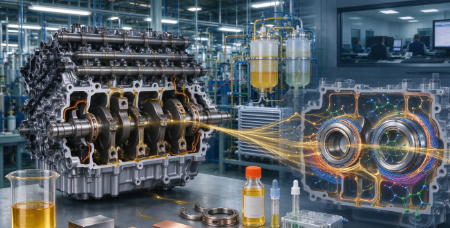
Industry-Wide Operational Challenges
Modern engine-oil manufacturing faces multiple stringent industry pressures: tightening environmental regulations requiring low-sulfur, low-phosphorus, low-ash formulations together with higher fuel-economy and emission-control targets. Downsized turbo-charged gasoline and diesel as well as hybrid powertrains impose harsher thermal-mechanical stresses on crankcase lubricants. Base oil alone cannot fulfill comprehensive engine-protection demands. Without properly selected single-component specialty additives, finished engine oils will suffer excessive friction loss, insufficient wear protection, rapid oxidative deterioration, harmful sludge-varnish deposit accumulation, and copper-alloy component corrosion. Formulators need to select suitable individual additives, match base-oil properties and end-engine requirements to resolve these formulation bottlenecks.
What are engine oil additives?
Engine oil additives are chemical compounds incorporated into the engine oil to enhance its properties, optimize performance, extend the life of the engine, and protect its components. They help maintain the engine's efficiency by reducing friction, wear, and heat, and addressing other specific operational concerns such as viscosity, oxidation, and deposits.
Core Principles & Fundamental Classification
Special-function single-component engine-oil additives are concentrated individual chemical substances for performance upgrading during engine-oil blending. Analogous to paraffin inhibitors modifying wax-crystal morphology without removing paraffin from crude oil: single-component additives cannot replace the intrinsic hydrodynamic lubrication capacity of base oils. Instead, individual molecules act at molecular and interfacial levels to deliver viscosity adjustment, friction-reduction, anti-wear, antioxidation, detergency-dispersion, corrosion-passivation and low-temperature flow improvement.
According to functional orientation, these single-component additives are divided into six primary groups: - Organic-molybdenum friction-modifying anti-wear additives: Sulfur-phosphorus-containing Mo-based multi-functional friction modifiers. - Ashless non-S/P friction modifiers: Nitrogen-containing borate ester series for fuel-economy-oriented engine-oil systems. - Ashless metal deactivators / corrosion inhibitors: Thiadiazole and methylbenzotriazole-derivative grades protecting copper-alloy components. - Ashless phosphite-ester multi-functional additives: Phosphite-type antioxidants with supplementary extreme-pressure anti-wear capability. - Oil-soluble ashless rust-preventive additives: Imidazoline-succinate-based acid-neutralizing antirust components. - Ashless high-temperature amine-type antioxidants: High-performance amine-based antioxidants for suppressing thermal-oxidative degradation of base stocks.
Performance-Driven Working Mechanisms
Different single-component additives realize performance improvement through distinct molecular pathways: - Organic-molybdenum friction modifiers (MoDTP): Decompose under boundary-lubrication conditions inside engine crankcases, generating molybdenum-containing tribochemical protective films on metal friction surfaces. They lower friction coefficient while providing extreme-pressure anti-wear and auxiliary antioxidation performance. - Nitrogen-containing borate-ester ashless friction modifiers: Sulfur-and-phosphorus-free ashless ingredients; form boron-rich boundary lubrication films on contact surfaces, delivering friction-reduction, wear-resistance and mild corrosion-inhibition effects, suitable for low-SAPS engine-oil formulations. - Ashless metal deactivators & corrosion inhibitors: Thiadiazole- / benzotriazole-derivative molecules adsorb onto copper-alloy surfaces to build dense barrier films, isolating active-sulfur and hydrogen-sulfur corrosive species and preventing copper-component corrosion under engine operating conditions. - Phosphite-ester multi-functional additives: Capture oxidative free radicals to restrain base-oil aging; form phosphorus-containing tribofilms under high temperature to realize combined antioxidation and extreme-pressure anti-wear performance with good thermal stability. - Imidazoline-succinate antirust additives: Possess strong acid-neutralizing capacity; adsorb onto metal surfaces to form protective layers against moisture and acidic combustion by-products, mitigating rust and electrochemical corrosion. - Amine-type high-temperature antioxidants: Scavenge free-radical intermediates generated during high-temperature oil oxidation, interrupting oxidation chain-reactions, reducing sludge and varnish generation and stabilizing oil viscosity under severe thermal conditions.
Consequences of Improper Additive Selection
Inadequate or mismatched single-component additive selection brings multiple operational risks. Chemical incompatibility between additives and base oils or co-additives triggers precipitation, sediment and performance loss. Unsuitable friction-modifier grades fail to achieve fuel-economy targets. Insufficient antioxidant capacity leads to rapid oil oxidation, massive sludge-varnish deposition and viscosity drift. Lack of effective metal-deactivators results in copper-alloy corrosion induced by active sulfur. Improper additive combinations may cause finished oils to fail low-SAPS, emission-related OEM-specification requirements. All above-mentioned defects shorten engine service life and increase equipment-maintenance costs for end-users.
Commercial Additive Portfolio Overview
- MSAIL 300L (Molybdenum dithiophosphate, MoDTP, CAS 72030-25-2): Liquid sulfur-phosphorus-containing organic-molybdenum friction-modifier; integrates extreme-pressure, anti-wear and antioxidation; widely applied in engine oils, industrial lubricants, neat-oil metalworking fluids and greases.
- FMET 2890 (Nitrogen-containing boric acid esters): Sulfur-phosphorus-free ashless friction modifier; excellent friction-reduction, wear-resistance and corrosion-inhibition; for internal-combustion engine oils, industrial lubricants, neat-oil metalworking fluids and greases.
- DMTD-8 (Thiadiazole octyl mercaptan condensate, CAS 13539-13-4): Liquid ash-free metal deactivator with auxiliary EP-antioxidant function; suppresses copper-alloy corrosion caused by active sulfur and hydrogen sulfide; used in automotive-industrial lubricants and metalworking fluids.
- CSAIL 3900 (Methylbenzotriazole TTA derivatives, CAS 94270-86-7): Liquid oil-soluble corrosion inhibitor and metal passivator for lubricating-oil and metalworking-fluid systems. - PSAIL 3012 (Dilauryl hydrogen phosphite, CAS 21302-09-0): Ashless multi-functional phosphite-ester additive combining antioxidation and extreme-pressure anti-wear performance with broad thermal stability; for lubricating-oils and polymer-material fields.
- CMET T703 (Heptadecenyl imidazoline succinate): Oil-soluble ashless antirust additive with outstanding acid-neutralization capability, synthesized via imidazoline-dodecenyl succinic-acid neutralization.
- OSAIL L060 (Octyl phenyl-α-naphthylamine, CAS 68259-36-9): Sulfur-phosphorus-free ashless amine antioxidant; low-volatility, good oil-solubility and high-temperature oxidation resistance; inhibits base-stock oxidative degradation and suppresses sludge-varnish build-up in engine oils, industrial and synthetic lubricants and greases.
Critical Performance Metrics for Qualified Single-Component Additives
Following the unified evaluation framework across UNPChemicals technical review series, high-quality single-component engine-oil additives shall meet four core performance metrics:
1. High efficiency at low treat rates: Achieve target friction-modification, antioxidation, anti-wear or metal-passivation performance under economically feasible dosage.
2. Broad formulation compatibility: Chemically compatible with mineral, synthetic, bio-based base oils and other co-existing additives; avoid antagonistic reactions, precipitation or seal-material damage.
3. Robust environmental stability: Retain core functions under engine-simulated high-temperature, shear, oxidation and combustion-by-product contamination conditions; comply with low-SAPS and emission-related regulatory constraints.
4. Practical industrial processability: Suitable physical state for metering and blending within engine-oil production facilities; easy-to-execute quality-control testing during manufacturing.
Application Domains & Formulation Selection Guidelines
These single-component additive systems serve multiple engine-oil manufacturing segments:
1. Gasoline-engine oils: Passenger-vehicle gasoline engines including turbo-charged and hybrid powertrain units.
2. Diesel-engine oils: Light-duty and heavy-duty commercial-vehicle diesel engine crankcase lubricants.
3. Hybrid-powertrain engine oils: Special-formulation crankcase oils for hybrid internal-combustion powertrains.
4. Associated industrial & ancillary products: Industrial lubricants, greases and neat-oil metalworking-fluid formulations.
Formulators need to evaluate engine type (gasoline / diesel / hybrid), OEM-performance specifications, low-SAPS requirements, base-oil category and engine-material characteristics before grade selection:
- Select MSAIL 300L or FMET 2890 when friction-reduction and fuel-economy improvement targets are required. Prefer FMET 2890 for S-P-restricted low-ash formulations.
- Deploy DMTD-8 or CSAIL 3900 for formulations requiring copper-alloy corrosion-passivation protection. - Adopt PSAIL 3012 for multi-purpose ashless antioxidation plus supplementary extreme-pressure anti-wear demands.
- Add CMET T703 when enhanced acid-neutralizing and antirust performance is needed.
- Use OSAIL L060 to boost high-temperature antioxidation capability for high-stress turbo-charged engine-oil systems.
Concluding Remarks
Reliable modern engine-oil performance relies not only on base-oil quality but also on rational screening and matching of single-component specialty additives in blending workflows. Organic-molybdenum / borate-ester friction modifiers, thiadiazole-benzotriazole-series metal deactivators, phosphite-ester multi-functional additives, imidazoline-type antirust agents and high-temperature amine antioxidants jointly realize friction-reduction, anti-wear, antioxidation, deposit-control and metal-corrosion-suppression functions. Appropriate additive selection helps manufacturers satisfy stringent low-SAPS, fuel-economy and OEM-specification requirements for gasoline, diesel and hybrid engine oils, protecting powertrain components and extending engine service life.
Contact UNPChemicals technical-sales team for datasheets, formulation recommendations and custom-grade support for your specific engine-oil-formulation projects.