 WhatsApp
 sales@unpchemicals.com
 +86 16638830202

Waxy Crude Oil and Cold‑Temperature Pipeline Blockage Roles of Five Categories of Chemical Paraffin Inhibitors
What are Paraffin Inhibitors?
Paraffin inhibitors are specialized oilfield chemical agents designed to tackle wax‑precipitation‑induced blockage issues during the exploitation and transportation of waxy crude oil; they interfere with the nucleation, aggregation and deposition stages of wax crystals via multiple working mechanisms including crystal‑structure disruption, particle dispersion and surface property modification, and cover five main categories namely solvent‑based, polymeric, surfactant‑based, nano‑composite and green bio‑based types, so as to restrain wax‑network formation, improve crude‑oil low‑temperature flowability and prevent wellbore and pipeline plugging caused by paraffin deposition.
Waxy‑crude‑oil output accounts for roughly 20 % of global crude‑oil production. More than 80 % of crude oil produced in China belongs to the waxy‑crude‑oil category. The average wax content of crude oil from major oilfields such as Daqing and Shengli exceeds 14 %. Once temperature drops, paraffin wax crystallizes and precipitates, readily blocking wellbores and pipelines. Chemical paraffin inhibitors constitute key agents for “low‑temperature unshackling” of waxy crude oil.
The Plight of Waxy Crude Oil: Wax “Grows” and Blocks Pipelines as Temperature Falls
Paraffin wax in crude oil is a mixture composed of long‑chain alkanes (carbon number generally ranging from C₁₈ to C₄₀). At high temperatures, paraffin wax dissolves stably within crude oil and the crude oil maintains good flowability. When temperature decreases, paraffin solubility drops sharply.
Paraffin molecules then separate out from crude oil and form tiny wax crystals. Like snowflakes, these wax crystals accumulate and interconnect to build three‑dimensional network structures that trap liquid crude oil inside mesh voids. Crude‑oil viscosity surges, flowability deteriorates, and wellbores or pipelines may become completely plugged in severe cases, triggering production shutdowns and even safety accidents.
Globally, waxy‑crude‑oil output accounts for about 20 % of total crude‑oil production. The situation in China is more prominent: over 80 % of domestically produced crude oil is waxy crude oil, and average wax content from flagship fields including Daqing and Shengli Oilfield surpasses 14 %. As oilfield development enters the high‑water‑cut stage, paraffin inhibition and maintenance work for oil wells become increasingly critical.
How Does Wax “Grow”? Three‑Stage Process: Nucleation‑Aggregation‑Deposition
Effective paraffin inhibition requires clear understanding of wax‑growth pathways. Crude‑oil wax‑deposition proceeds in three well‑defined stages:
Nucleation. As temperature decreases, paraffin in crude oil reaches supersaturation. Paraffin molecules precipitate and form initial micro‑sized wax crystal nuclei, analogous to the first frost patterns forming on winter windowpanes.
Aggregation. Wax crystal nuclei keep growing; wax crystals assemble and align orderly to form network structures, similar to snowflakes merging into continuous ice networks.
Deposition. Wax‑crystal aggregates diffuse toward surfaces of wellbores, pipelines or process equipment and adhere to these surfaces to generate waxy deposits, comparable to limescale accumulating inside water pipes. Deposits build up progressively and eventually choke pipelines.
The core logic of chemical paraffin inhibitors is to interfere with one or several of these three stages so as to suppress wax‑crystal formation, growth or deposition.
Four Core Mechanisms of Chemical Paraffin Inhibitors: Disruption, Interference, Dispersion and Surface Modification
Despite broad diversity among chemical paraffin inhibitors, their working mechanisms can be summarized into four major categories:
Disrupt wax‑crystal structures. Nano‑composite and polymeric inhibitors can act as heterogeneous nucleation sites. They co‑crystallize with wax molecules or adsorb onto nascent tiny wax‑crystal surfaces, modulating crystal morphology and size to produce sparser, discrete wax crystals and preventing interlocking network formation.
Interfere with wax‑crystal aggregation. Certain polymeric inhibitors incorporate themselves into growing wax crystals through co‑crystallization. Their polar groups distort wax‑crystal lattices and retard crystal growth; high‑molecular‑weight backbones introduce steric hindrance that hinders coalescence of small wax‑crystal particles. Settling and surface‑adhesion capacity of wax crystals is substantially weakened, making wall attachment difficult.
Disperse wax‑crystal particles. Solvent‑type inhibitors dissolve wax crystals and raise paraffin solubility in crude oil. Small‑molecule oil‑soluble inhibitors penetrate pre‑formed wax‑crystal aggregates to soften and disintegrate agglomerates, delivering dual wax‑removal and wax‑inhibition performance. Surfactant‑based inhibitors emulsify and disperse wax crystals and mitigate inter‑particle aggregation tendency.
Modify surface properties for wax deposition. Water‑based inhibitors adsorb onto wellbore or pipeline inner walls to generate polar aqueous films. This shifts solid‑fluid friction toward liquid‑liquid interfacial sliding and greatly reduces frictional resistance. Surfactant‑type inhibitors adjust interfacial wettability and build oil‑repellent surfaces, preventing wax‑crystal‑aggregate adsorption and deposition; any deposited wax layers remain fragile and readily stripped by flowing crude oil.
Category 1: Solvent‑Based Paraffin Inhibitors — The Oldest “Dissolve‑Wax‑by‑Oil” Technology with Obvious Drawbacks
Solvent addition represents one of the oldest and most effective approaches to sustaining stable pipeline flow and removing surface wax deposits on equipment. Typical solvents include xylene, toluene, benzene, chlorinated hydrocarbons and others. Its principle follows “like‑dissolves‑like”: organic solvents dissolve solid wax.
Nevertheless, solvent‑based inhibitors show significant shortcomings:
Corrosion hazard: Chlorinated hydrocarbons provoke severe pipeline corrosion when applied together with crude oil.
Safety risks: Benzene, toluene and xylene feature low flashpoints, complicating construction‑site safety; additionally, their penetration into existing wax layers is limited.
Restricted performance: Blends of xylene or toluene with lighter solvents such as heptane, hexane or kerosene can dissolve wax, yet hardly suppress wax‑deposition processes. In short, they serve wax‑removal purposes but offer limited wax‑inhibition capacity.
Environmental concerns: Hazards associated with solvent safety, environmental compatibility, storage and toxicity hinder large‑scale field deployment.
Solvent‑based paraffin inhibitors function much like adhesive bandages: they deliver emergency wax removal yet treat symptoms rather than root causes, accompanied by multiple side‑effects.
Category 2: High‑Molecular‑Weight Polymeric Paraffin Inhibitors — Co‑crystallization with Wax to Disintegrate Wax‑crystal Networks from Within
Polymeric paraffin inhibitors are the most extensively researched and applied class at present. Their core mechanism relies on co‑crystallization between polymer molecules and wax substances upon wax‑crystal precipitation. Polymer molecules integrate inside wax crystals; polar groups of polymers disrupt wax‑crystal aggregation and inhibit deposition‑prone network‑structure generation.
Polymeric paraffin inhibitors fall into two main sub‑groups: linear polymers and comb‑shaped copolymers.
Linear‑polymer Representative: EVA — The “Golden Window” at 25 %‑30 % VA Content
Ethylene‑vinyl‑acetate copolymer (EVA), synthesized by copolymerizing ethylene and vinyl acetate (VA), is the most‑studied and widely deployed linear polymeric paraffin inhibitor. Besides EVA, polyethylene‑poly(ethylene‑propylene) diblock copolymer (PE‑PEP) and poly(ethylene‑butene) (PEB) also demonstrate capacity for wax‑crystal‑size control.
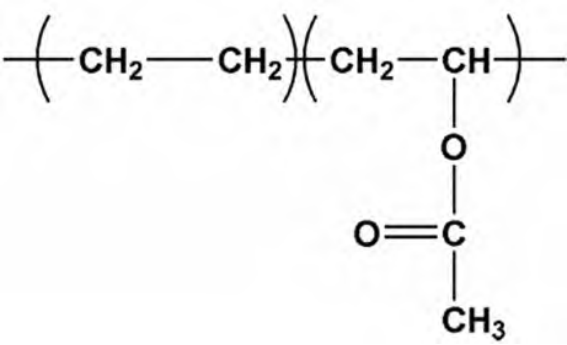
Figure 1 Molecular‑structure formula of EVA (ethylene‑vinyl‑acetate copolymer): classic representative of linear polymeric paraffin inhibitors
EVA performance is governed by two key parameters: vinyl‑acetate (VA) mass fraction and average relative molecular mass.
VA content determines polymer polarity. Excess VA reduces co‑crystallization capability between copolymer and wax; insufficient VA lowers copolymer solubility. Research indicates EVA containing 25 %‑30 % VA by mass achieves optimal paraffin‑inhibition performance — this is the EVA “golden ratio”. Average relative molecular mass barely influences crystallinity but modulates solubility: higher molecular weight corresponds to poorer copolymer solubility.
EVA properties can be further enhanced via modification. Mun et al. grafted hydrophobic monomers onto commercial EVA using low‑energy electron‑beam irradiation. At a dosage of 200 mg/L, pour‑point of Kumkol crude oil (Kazakhstan) decreased from 12 °C to −3 °C with wax‑inhibition efficiency reaching 90 %. Ren et al. prepared EVAL‑series inhibitors through methanol‑mediated EVA alcoholysis. EVAL‑5 with 90.94 mol % degree of alcoholysis lowered pour‑point by 11 °C. Higher polarity of EVAL generates stronger electrostatic repulsion between wax crystals and impedes inter‑crystal linkage.
Comb‑Shaped Copolymers: Long Alkyl Side‑Chains “Insert” into Wax Crystals While Polar Groups “Distort” Crystal Architecture
Comb‑shaped copolymers resemble combs: they possess a central backbone (main chain) with side‑chain moieties attached. Comb‑shaped copolymers carry both polar and non‑polar functional groups:
Non‑polar segments, usually long alkyl side‑chains, co‑crystallize with paraffin upon wax‑crystal emergence and suppress network‑structure formation. Polar moieties (e.g. ester, vinyl‑acetate, maleic‑anhydride, acrylonitrile groups) distort wax‑crystal lattices and hinder crystal growth. Furthermore, comb‑shaped copolymers may form partial network structures within crude oil, introducing steric hindrance and disturbing wax‑crystal growth and aggregation.
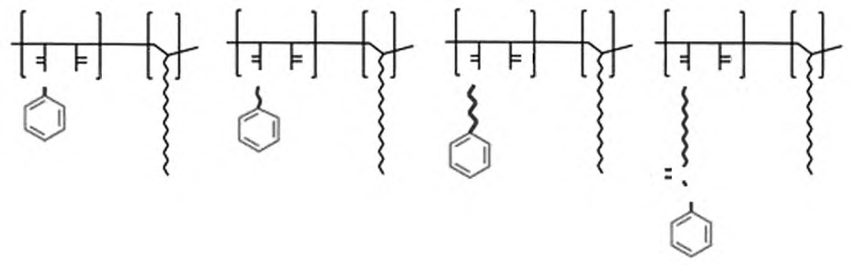
Figure 2 Molecular‑structure formulas of several comb‑shaped polymers: “comb‑type” architecture with main‑chain backbone, long alkyl side‑chains and polar groups
Studies report improved paraffin‑inhibition performance for aryl‑containing comb‑shaped polymers. Zhao et al. synthesized MACB copolymer; benzimidazole groups within MACB form hydrogen bonds and π‑π stacking interactions with crude‑oil asphaltenes, improving dispersion of asphaltene aggregates. Well‑dispersed asphaltenes themselves act as “natural paraffin inhibitors” and enhance low‑temperature flowability of waxy crude oil.
Length of alkyl side‑chains constitutes a critical performance‑determining factor for comb‑shaped copolymers. Side‑chain alkyl length should slightly exceed average carbon‑chain length of readily‑crystallizable wax components present in target waxy crude oil. Al‑Sabagh et al. synthesized comb‑shaped copolymers from oleic‑acid‑maleic‑anhydride precursors and esterified them using long‑chain fatty alcohols with carbon numbers C18, C20 and C22. The C22‑esterified comb‑shaped copolymer delivered the best paraffin‑inhibition effect.
Meng et al. synthesized paraffin‑inhibitor POA‑VA using octadecyl‑acrylate and vinyl‑acetate monomers. They compounded POA‑VA with viscosity reducers to construct heavy‑oil paraffin‑inhibition‑viscosity‑reduction systems. At 10 % mass fraction, crude‑oil solidification point dropped by 10.2 °C and viscosity‑reduction ratio hit 95.2 %.
Category 3: Surfactant‑Based Paraffin Inhibitors — Emulsify Crude‑Oil into Tiny Droplets; Viscosity Reduction up to 83 %
Surfactants simultaneously contain hydrophilic and hydrophobic moieties. Hydrophobic segments, commonly long‑chain alkyl groups, co‑crystallize with growing wax crystals; polar groups hamper wax‑crystal agglomeration. Surfactants also modify wettability of wax‑deposition surfaces, reduce wax‑crystal adhesion and restrain deposition.
Surfactants feature one prominent advantage: emulsification. They function as emulsifiers and stabilize dispersed‑phase droplets within continuous aqueous phases, generating stable oil‑in‑water (O/W) emulsions with low interfacial tension. Crude oil is dispersed as fine suspended droplets inside continuous water phases and apparent viscosity decreases drastically.
Kumar et al. formulated oil‑in‑water (O/W) emulsions for high‑pour‑point heavy Indian crude oil using non‑ionic surfactants. Under conditions of 60 % oil content and 2 % surfactant dosage, crude‑oil viscosity dropped by approximately 83 %, and pour‑point of emulsified crude oil decreased markedly from 42 °C to 1 °C. Sharma et al. adopted anionic surfactant sodium dodecyl sulfate (SDS) to prepare oil‑water emulsions for two Indian crude‑oil samples; post‑emulsification pour‑points fell as low as 0 °C, suiting subsea pipeline‑transport scenarios.
Cationic surfactants also exhibit outstanding performance. Gu et al. evaluated hexadecyl‑trimethyl‑ammonium chloride (CTAC), hexadecyl‑trimethyl‑ammonium bromide (CTAB) and octadecyl‑trimethyl‑ammonium chloride (OTAC). CTAC delivered the most pronounced viscosity‑reduction and paraffin‑inhibition effects. CTAC precipitates and stacks together with long‑chain alkanes to form crystal nuclei; cationic moieties and corresponding chloride‑counter‑ions act as wax‑crystal modifiers and suppress wax‑crystal enlargement. Among cationic surfactants synthesized by Khidr et al., C12‑alkyl‑chain variants displayed stronger interactions with crude‑oil paraffin and superior paraffin‑inhibition efficiency.
Gemini surfactants possess better surface‑active properties than single‑chain surfactants and attract considerable research interest. They adsorb onto wax‑particle surfaces, restrain crystal growth and alter crystal morphology via micelle formation.
Category 4: Nano‑Composite Paraffin Inhibitors — Nanoparticles‑Polymer Combinations Achieve “1 + 1 > 2” Effects
Conventional polymeric paraffin inhibitors suffer drawbacks including poor crude‑oil compatibility, insufficient stability, weak shear resistance and inferior thermal‑salt tolerance. Nanomaterials feature unique molecular‑scale dimensions and large specific surface areas together with quantum‑size, surface and interfacial effects. When combined with traditional paraffin inhibitors, they effectively modulate wax‑crystal heat‑distortion temperature, crystallinity, crystallization rate and grain‑size.
Nano‑composite paraffin inhibitors integrate merits of conventional inhibitors and nanoparticles, achieving substantial improvements in mechanical robustness, shear tolerance and thermal stability. They greatly enhance flow properties of waxy crude oil by adjusting wax‑crystal dimensions, crystallization kinetics and crystal‑growth directions. Three major sub‑classes exist for nano‑composite paraffin inhibitors: silicon‑based, carbon‑based and metallic‑nanoparticle‑based inhibitors.
Silicon‑Based Nanomaterials: SiO₂ Transforms Needle‑Shaped Wax Crystals into Spherical Grains; Montmorillonite Realizes 25 °C Solidification‑Point Reduction
Silicon‑based materials show excellent chemical and thermal stability and maintain reliable performance under extreme high‑temperature and heavily‑corrosive operating environments.
Nanosilica (SiO₂) represents non‑toxic, odorless, pollution‑free, cost‑effective and environmentally‑friendly nanomaterial widely adopted in industry. Nevertheless, abundant surface hydroxyl groups endow high surface energy and render bare nanosilica prone to agglomeration, so organic surface‑modification is mandatory. Mao et al. organically modified nano‑SiO₂ using silane‑coupling‑agent KH570 and prepared graft‑copolymerized nano‑SiO₂ composite paraffin inhibitors. For heavy‑oil samples of diverse viscosity and pour‑point, viscosity reduction exceeded 60 % and pour‑point decreased by over 10 %, outperforming conventional EVA inhibitors.
Ning et al. compared performance of neat EVA and EVA/SiO₂ nano‑composite inhibitors. EVA/SiO₂ adsorbs asphaltenes and resins present in crude‑oil, converting needle‑shaped wax crystals into spherical ones. It simultaneously increases co‑crystallization sites between EVA and wax molecules and yields sparser, more discrete wax‑crystal populations.
Nanoclay minerals constitute another important subset of silicon‑based nano‑inhibitors:
Nanomontmorillonite: Luo Xiaowen et al. compounded cetyl‑trimethyl‑ammonium‑bromide‑modified montmorillonite (OMMT) with terpolymers. Addition of 0.1 % PSMS/OMMT achieved solidification‑point reduction up to 25 °C and viscosity‑reduction ratio of 65.7 %. Al‑Sabagh et al. synthesized ODA/MMT composite inhibitor which depressed crude‑oil solidification‑point from 27 °C down to −3 °C and demonstrated better long‑term stability than conventional polymers.
Nanosepiolite: Zhang et al. manufactured EVA/nanosepiolite composite inhibitors through melt‑blending. At optimal dosage of 200 mg/L, solidification‑point, viscosity and yield‑stress of Daqing crude oil were further lowered.
Nano‑attapulgite: Tu et al. modified nano‑attapulgite using stearic acid and acetic acid to produce ATT/EVA nano‑composite inhibitors. At 200 mg/L dosage, pour‑point of model‑oil sample dropped by 29 °C. This performance surpasses modified nano‑SiO₂/EVA composite inhibitors at lower additive‑loading.
Carbon‑Based and Metallic‑Nanoparticle Systems: Graphene Delivers 24 °C Pour‑Point Reduction; Carbon Nanotubes Shrink Wax‑Crystal Size from 756 nm to 86 nm
Carbon‑based nanomaterials possess distinctive properties and promising application prospects. Graphene features monolayer two‑dimensional honeycomb‑lattice architecture formed via sp² hybridization of carbon atoms, with theoretical specific surface area reaching 2630 m²/g. It serves as ideal building‑block for polymeric nanocomposites.
Mahmoud et al. oxidized graphite and functionalized graphene‑oxide surfaces with oleic‑acid‑type compounds to build nanocomposite systems. At 2000 mg/L dosage, pour‑point of crude oil from Egypt’s Qarun Oilfield dropped sharply from 30 °C to 6 °C. Jaberi et al. developed graphene‑oxide‑polyethylene‑glycol (GO‑PEG) nanocomposite systems. At 800 mg/L dosage, solidification‑point decreased from 17 °C to −5 °C and wax‑crystal morphology transitioned from needle‑shape to spherical shape.
Carbon nanotubes represent another high‑profile carbon‑based nanomaterial. Mohammadi et al. synthesized single‑walled carbon nanotubes (SWCNTs). Strong π‑π electronic‑cloud interactions emerge between SWCNT aromatic rings and asphaltene molecules. Asphaltenes adsorb onto nanoparticle surfaces and growth of asphaltene aggregates is effectively controlled. After treatment, dense spherical wax‑crystal morphology transforms into fine needle‑shaped grains; average wax‑crystal size decreases from 756 nm down to 86 nm — nearly nine‑fold reduction. Carbon nanotubes act as efficient inhibitors and dispersants under combined high‑pressure and high‑temperature environments.
Metallic nanomaterials leverage magnetic‑field‑synergistic effects between magnetic nanoparticles and paraffin inhibitors. Huang et al. blended nickel‑based‑metal‑oxide nanoparticles NiCo₂O₄ with EVA. Under magnetic‑field coupling, yield‑stress of model‑oil decreased by 195 Pa (neat EVA only achieved 149 Pa reduction). Wang et al. investigated ferromagnetic‑nano‑composite paraffin inhibitor (FNPPD). When coordinated with magnetic‑fields, FNPPD reduces both deposit‑layer thickness and wax content within deposits. Yu et al. developed nano‑Fe₃O₄‑EVA composite paraffin inhibitors. Through combined heterogeneous‑nucleation mechanisms and magnetic‑field‑stacking synergies, wax‑crystal compaction increases, more light‑oil fractions are released, and viscosity as well as solidification‑point of waxy crude oil decline.
Category 5: Green‑Natural / Bio‑Based Paraffin Inhibitors — Plant‑Oil and Lignin‑Derived Agents; Environment‑Friendly and Biodegradable
Currently mainstream crude‑oil paraffin inhibitors are synthetic chemical additives. Constraints including environmental toxicity, complex manufacturing workflows, cost factors and crude‑oil‑compatibility issues motivate researchers to explore green natural substitutes for synthetic chemicals or develop bio‑based inhibitors via natural‑material modification.
For raw natural‑green materials: Ragunathan et al. studied wax‑deposition‑suppression performance of palm‑oil derivatives including crude palm oil (CPO) and crude palm‑kernel oil (CPKO). Both palm‑oil variants inhibit wax‑crystal deposition. Alpandi et al. assessed low‑cost natural plant‑derived paraffin inhibitors. When 5 % jatropha‑seed‑oil (JSO) blended with crude oil from Malaysia’s Penara Oilfield, paraffin‑inhibition efficiency (PIE) peaked at 86.30 %. These natural plant‑based additives restrain wax‑crystal aggregation and disrupt wax‑crystal structures.
Regarding modified bio‑based paraffin inhibitors: Gabayan et al. reported fatty‑acid esters (especially oleate esters) synthesized from bio‑based feedstocks improve flow properties of waxy crude oil. Carboxylic‑acid functional groups of oleic acid form hydrogen‑bonds with polar groups located on wax‑crystal surfaces; hydrocarbon‑chains interact with non‑polar crystal domains. This prevents wax‑crystals from interconnecting into network‑structures and promotes formation of fewer, smaller, rounder wax‑crystal grains.
Blindheim et al. prepared C18‑esterified‑lignin paraffin inhibitors by esterification reaction between lignin and stearoyl‑chloride. Solidification‑point reduction of 6 °C was achieved. Modified‑lignin functions by providing heterogeneous‑nucleation centers for wax crystallization.
Pal et al. synthesized coconut‑oil‑ethyl‑ester (BPPD) paraffin inhibitor through transesterification reactions and developed plant‑oil‑derived inhibitors. BPPD lowered solidification‑point of Indian waxy crude‑oil by 12 °C and simultaneously reduced crude‑oil viscosity. BPPD modifies pipeline‑surface wettability from neutral state toward water‑wet condition and curtails wax‑deposition. Biodegradation tests confirm BPPD is biodegradable and non‑toxic — qualifying it as genuine “green paraffin inhibitor”.
Future Outlook: From Stand‑Alone Wax‑Inhibition toward Integrated Inhibition‑Removal and Multi‑Functional Single‑Agent Systems
As oil‑field development enters high‑water‑cut phases, paraffin‑inhibition and maintenance operations gain greater importance, promising broad market prospects for oil‑field paraffin inhibitors. Future‑generation oil‑field paraffin inhibitors must evolve toward high‑efficiency, environmental‑friendliness and low‑cost targets. Three major research priorities are identified:
First, deepen research on wax‑crystal‑growth mechanisms and paraffin‑inhibition principles. Build prediction models capable of real‑time, accurate forecasting of wax‑deposition behaviors and inhibitor performance. Realize effective wax‑deposition control and optimize inhibitor‑type selection plus application‑concentrations to supply theoretical foundations for developing and optimizing novel paraffin inhibitors.
Second, develop integrated wax‑inhibition‑and‑removal agents delivering multi‑functional performance within single formulations. Enhance paraffin‑inhibition efficacy and wax‑removal efficiency and support oil‑field cost‑reduction and efficiency‑improvement objectives. Develop composite paraffin‑control technologies combining different inhibition mechanisms; integrate physical paraffin‑control techniques and chemical paraffin‑inhibitors to generate synergistic benefits and improve oil‑field economic returns.
Third, reinforce analysis and research of natural raw‑material feedstocks. Develop environmentally‑benign, cost‑effective and recyclable paraffin inhibitors to support sustainable‑development goals and guarantee high‑efficiency oil‑field production.
Conclusion: Chemical Paraffin Inhibitors Bear Heavy Responsibilities for “Unshackling” Waxy Crude Oil
From early solvent‑based paraffin inhibitors to widely‑adopted polymeric inhibitors, and further to surfactant‑based, nano‑composite and green‑natural/bio‑based paraffin inhibitors: the five classes of chemical paraffin inhibitors each possess distinct strengths and together constitute a toolbox securing low‑temperature flowability for waxy crude oil.
Multiple landmark research outcomes are progressively transforming the challenge of wellbore wax‑blockage into reality of low‑temperature flowable crude oil: EVA’s golden VA‑content window; comb‑polymer “comb‑shaped” molecular architecture; nano‑SiO₂ converting needle‑shaped wax‑crystals into spherical grains; montmorillonite achieving 25 °C solidification‑point reduction; carbon‑nanotube‑mediated shrinkage of wax‑crystal size from 756 nm down to 86 nm; non‑toxic biodegradable coconut‑oil‑ethyl‑ester inhibitors and so forth.
In future, with deepening mechanistic investigations, advancement of composite‑agent technologies and breakthroughs for green‑environment‑friendly materials, chemical paraffin inhibitors will play an increasingly critical role in securing safe and efficient exploitation and pipeline‑transport of waxy crude oil.
UNPChemicals Paraffin Inhibitors
UNPChemicals develops and manufactures the PCMET‑series paraffin inhibitors covering polymeric, surfactant‑modified and nano‑composite formulationsUNPChemica.... Relying on precisely‑tuned copolymer molecular architecture, these products co‑crystallize with paraffin fractions, distort wax‑crystal morphology and hinder the construction of rigid three‑dimensional wax networks, which effectively suppress wax deposition and improve low‑temperature crude‑oil flowabilityUNPChemica.... The PCMET portfolio supports full‑cycle oil‑field deployment from downhole wellbores, gathering lines to long‑distance transmission pipelines and storage tanks, and maintains stable performance under saline and fluctuating temperature conditions; customized grades can be selected for different crude‑oil properties to reduce wax‑related operational risks and cut the frequency of mechanical pigging and thermal‑treatment maintenance for field assetsUNPChemica.