 WhatsApp
 sales@unpchemicals.com
 +86 16638830202
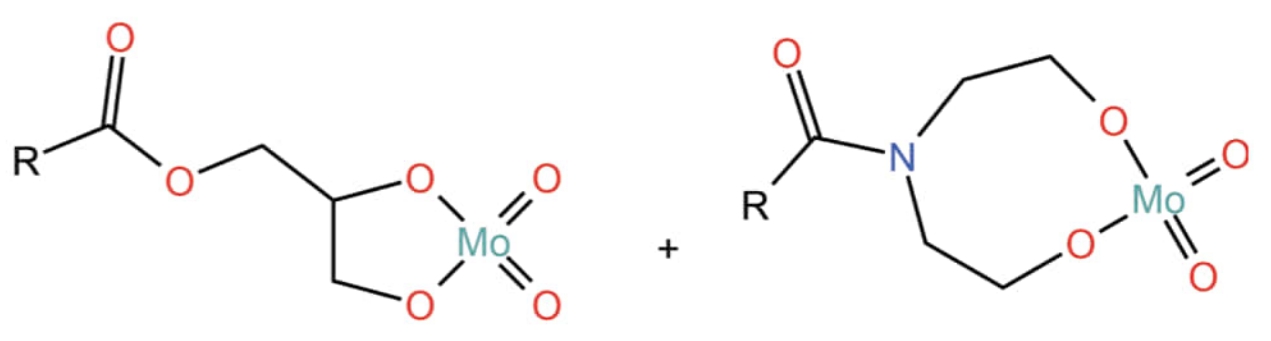
MSAIL 8550 improves the anti-friction properties of lubricating oils and maintains this performance after oxidation
What is Organomolybdenum complex (S/P free) MSAIL 8550?
MSAIL 8550 belongs to the family of organomolybdenum complexes, with its core feature being "sulfur-free and phosphorus-free" (S/P Free). It does not function through traditional sulfur-phosphorus extreme pressure chemistry for anti-wear effects but acts as a highly efficient friction modifier and antioxidant synergist. Product information indicates it possesses outstanding friction-reducing capability, can significantly enhance anti-wear performance when synergizing with sulfur-containing additives, and can effectively control oil oxidation and reduce deposits. Its key characteristics of "maintaining anti-friction performance after oxidation" and "excellent antioxidant synergistic effects with aromatic amine antioxidants" are precisely what address the aforementioned industry pain points.
Theoretical Mechanism Analysis: How does MSAIL 8550 achieve long-term friction reduction before and after oxidation?
1. Initial Friction Reduction Mechanism: Tribocatalytic Formation of a Solid Lubricating Film
Surface Adsorption and Pre-film Formation: The organomolybdenum molecules of MSAIL 8550 are polar and can rapidly adsorb onto the surfaces of metal friction pairs, forming an oriented and ordered adsorption film. This film provides a degree of boundary lubrication during the initial stages of friction, reducing the coefficient of friction at startup and during early operation.
Tribocatalytic Reaction Forming MoS₂: Extremely high local temperatures and pressures are instantaneously generated in the micro-contact zones during friction. In this "tribocatalytic" environment, the organomolybdenum molecules in MSAIL 8550 decompose. The molybdenum element reacts with the friction pair surface material or trace active substances in the environment, catalytically generating molybdenum disulfide (MoS₂) in situ, which possesses a layered hexagonal crystal structure. The layers within MoS₂ are held together by weak van der Waals forces, resulting in extremely low shear strength. This makes MoS₂ an excellent solid lubricant that effectively separates friction surfaces, thereby achieving significant friction reduction.
The Deeper Advantage of "S/P Free": This design makes its friction-reduction pathway independent of sulfur and phosphorus chemistry, which can corrode certain metals (e.g., copper) or poison exhaust after-treatment catalysts. This grants it broader material compatibility and better environmental friendliness, making it particularly suitable for modern lubricant formulations that are low in sulfur and phosphorus and compatible with after-treatment systems.
2. Post-Oxidation Performance Retention Mechanism: Triple Protection Ensuring Durability
Inherent High-Temperature Chemical Stability of the Friction Film: The in situ generated MoS₂ friction film not only provides good lubrication but is also relatively stable in its chemical properties at high temperatures, possessing greater oxidation resistance than films formed by many organic friction modifiers. This allows this critical solid lubricating film to remain largely intact and continue to provide friction reduction even within an overall oxidizing oil environment.
Antioxidant Contribution of the Additive Itself: MSAIL 8550 inherently possesses the ability to "control oxidative degradation." Its molecular structure may be designed with functional groups capable of quenching alkyl radicals (R·) or decomposing hydroperoxides (ROOH), thereby directly participating in and delaying the chain oxidation reaction of the base oil. This ensures the additive itself is less prone to decomposition and failure in an oxidizing environment, guaranteeing a continuous supply of the "active molybdenum source."
Excellent Synergistic Effect with Aromatic Amine Antioxidants (The Critical Core): This is its "system-level" strategy for maintaining performance. Aromatic amine antioxidants primarily function by donating hydrogen atoms to terminate free radical chain reactions. Research suggests that certain molybdenum compounds can synergize with aromatic amine antioxidants. Possible mechanisms include: molybdenum species catalytically decomposing hydroperoxides, reducing ROOH concentration; or regenerating partially oxidized antioxidants, restoring their antioxidant capacity. This "1+1>2" synergistic effect significantly strengthens the entire lubricant system's antioxidant defense network. It holistically delays oil viscosity increase, total acid number (TAN) rise, and deposit formation, creating a relatively "milder," less-oxidized internal environment for MSAIL 8550's friction-reducing function, allowing it to maintain efficacy for a longer duration.
Design of the Experimental Validation Plan
To scientifically validate the aforementioned mechanisms and product claims, the following multi-dimensional validation plan can be designed.
1. Experimental Design
Sample Preparation:
Group A: Pure base oil (control group).
Group B: Base oil + 1.0 wt% MSAIL 8550 (core test group).
Group C: Base oil + an equivalent molybdenum content of a traditional sulfur- and phosphorus-containing organomolybdenum additive (comparison group 1).
Group D: Base oil + a common friction modifier (e.g., ester-based, comparison group 2).
(Optional) Group E: Formulation of Group B + 0.5 wt% typical aromatic amine antioxidant (synergy verification group).
Accelerated Oxidation Simulation:
Employ the Rotating Pressure Vessel Oxidation Test (RPVOT), subjecting each oil sample to accelerated oxidation for different durations (e.g., 0h, 24h, 48h) at 150°C under 620 kPa oxygen pressure. The oxidized samples are used for all subsequent tests.
2. Performance Evaluation Methods
Core Tribological Performance Evaluation:
Equipment: High-frequency reciprocating tribometer (e.g., SRV).
Test Conditions: Using a ball-on-disc contact configuration under set load, frequency, and temperature.
Test Content: Measure the friction coefficient curves for each sample before oxidation and after different oxidation times, and calculate the average coefficient of friction during the stable stage. Simultaneously, measure the wear scar diameter on the lower disc after testing.
Key Observation Metric: The magnitude of change in friction coefficient and wear scar diameter for Group B (MSAIL 8550) before and after oxidation should be significantly smaller than that for Groups C and D.
Auxiliary Evaluation of Oil Oxidation Stability:
Viscosity Change: Measure the kinematic viscosity of oil samples at 40°C and 100°C before and after oxidation, calculating the viscosity increase rate. MSAIL 8550 samples (especially Group E) should exhibit lower viscosity increase.
Acid Number Change: Determine the Total Acid Number (TAN) of oil samples before and after oxidation. MSAIL 8550 should effectively suppress TAN rise.
Fourier Transform Infrared Spectroscopy (FTIR): Analyze changes in the absorption peak in the carbonyl region (~1710 cm⁻¹) of oil samples before and after oxidation, semi-quantitatively assessing the accumulation of oxidation products.
Surface Film Analysis (Direct Evidence):
X-ray Photoelectron Spectroscopy (XPS): Analyze the surface of the steel balls after friction testing, detecting the chemical states of elements such as Mo 3d, S 2p, Fe 2p, and O 1s. The focus is to confirm whether the characteristic signals of MoS₂ (Mo 3d₅/₂ binding energy ~229.0 eV, S 2p binding energy ~161.5 eV) can still be detected on the friction surface after oxidation, which would serve as "fingerprint" evidence for the persistence of its friction film.
Expected Results and Discussion
Expected Tribological Data: It is anticipated that Group B (MSAIL 8550) with fresh oil will exhibit the lowest friction coefficient and wear scar diameter. After oxidation, the increment in its friction coefficient and wear scar diameter is expected to be the smallest, showing the most stable performance profile. In contrast, the performance of Groups C and D may degrade significantly after oxidation.
Expected Oil Analysis Data: Group B, and particularly Group E (with synergistic antioxidant), should outperform other groups in metrics such as viscosity increase, TAN rise, and FTIR carbonyl index, confirming its ability to control overall oxidation and maintain the base condition of the oil.
Expected Surface Analysis Results: XPS analysis is expected to clearly detect the characteristic peaks of MoS₂ on the friction surfaces of Group B samples (both before and after oxidation). On the surfaces of oxidized Group C samples, the chemical state of molybdenum may have transformed into non-lubricating molybdenum oxides (e.g., MoO₃).
Comprehensive Discussion: The aforementioned expected results should be closely integrated with the theoretical mechanisms in Part II. The durable and stable performance can be directly attributed to the stable MoS₂ friction film, the inherent antioxidant action of MSAIL 8550, and the systemic oxidation protection provided by synergy with aromatic amines. Compared to traditional additives, this highlights its "long-term" advantage.
Application Cases and Outlook
Application Cases:
CVJ Grease: Constant Velocity Joints (CVJs) operate in harsh environments, placing extremely high demands on the grease's long-life lubrication, oxidation resistance, and anti-wear properties. The excellent friction reduction, oxidation stability, and anti-wear synergy of MSAIL 8550 make it an ideal choice for enhancing the service life and reliability of CVJ greases.
Long-Drain Engine Oils: For engine oil formulations targeting extended drain intervals, MSAIL 8550 can help maintain fuel economy throughout the entire lifecycle (via stable friction reduction) and synergistically control sludge and deposits (via oxidation control), meeting high standards such as API SP/FA-4.
Conclusion and Outlook:
Theoretical analysis and the validation plan indicate that MSAIL 8550, through its unique friction-reduction pathway of tribocatalytic in situ generation of a MoS₂ solid lubricating film, combined with its powerful inherent and synergistic antioxidant capabilities, provides stable and reliable friction reduction protection for lubricants throughout their entire lifecycle, from initial use to post-oxidation. Its sulfur- and phosphorus-free nature further aligns with environmental regulatory trends.
Looking forward, as demands for equipment efficiency and reliability continue to grow, the application potential of MSAIL 8550 in areas such as electric vehicle reduction gear oils (requiring high electrical conductivity compatibility and lifetime lubrication), high-performance wind turbine gear oils (requiring extremely long maintenance intervals), and energy-efficient hydraulic oils warrants further exploration and development. Through rigorous formulation design and systematic validation, MSAIL 8550 is poised to become one of the key additives driving lubrication technology towards "long-life, high-efficiency, and environmental sustainability."