 WhatsApp
 sales@unpchemicals.com
 +86 16638830202
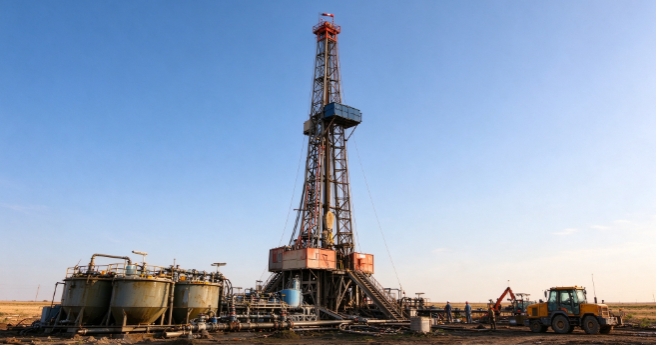
Industry-Wide Operational Challenges
Oil-gas exploration encounters complex subsurface conditions including high formation salinity, reactive shale strata and variable down-hole physicochemical environments. Bare base fluids cannot independently satisfy requirements such as wellbore pressure balance, cuttings suspension, emulsion stability and reservoir-surface wettability regulation. Without purpose-tailored additive packages, operators face risks of shale hydration, invert-emulsion breakdown, reservoir impairment and limited adaptability to high-temperature drilling scenarios. Formulators require targeted additive chemistries to overcome these practical formulation bottlenecks.
Core Principles & Fundamental Classification
Drilling-and-completion-fluid additives are specialty chemical components for modifying physicochemical behaviours of wellbore service fluids. Analogous to paraffin inhibitors modifying wax-crystal morphology without removing paraffin from crude oil: drilling-fluid additives do not replace the bulk properties of water or hydrocarbon continuous phases. Instead, they function at molecular and interfacial levels to tune rheology, emulsion stability and surface-wetting characteristics.
They fall into three primary application groups: - Additives for water-based mud (WBM): rheology modifiers, density adjusters and high-temperature stabilizers for aqueous mud systems. - Additives for oil-based and synthetic-based mud (OBM / SBM): invert-emulsion emulsifiers, wetting agents, dispersants and lubricants for water-in-oil invert-emulsion fluids. - Oil-field cleaning-agent additives: surfactants for equipment cleaning, emulsion elimination and reservoir-wettability adjustment.
Performance-Driven Working Mechanisms
Different additive categories realize performance improvement through distinct molecular pathways: Water-based-mud functional additives: Polymers and bentonite-modifying agents build viscosity for cuttings suspension; high-temperature stabilizers preserve rheological performance under thermal stress; inorganic weighting minerals adjust fluid density to balance formation pressure. Invert-emulsion mud additives: Multi-component emulsifiers stabilize water-in-oil emulsion structures. Wetting agents maintain oil-wet character of solid particles and reservoir surfaces to inhibit shale swelling and reduce formation damage. Dispersants and lubricants further optimize overall mud properties. For synthetic-based mud, additive systems are re-matched to adapt to aliphatic biodegradable base fluids. Oil-field cleaning additives: These substances alter oil-water interfacial behaviours to accomplish degreasing, dirt removal and reservoir-surface wettability reconfiguration amid dynamically changing subsurface physical-chemical conditions.
Consequences of Improper Additive Selection
Inadequate or mismatched additive selection brings multiple operational risks. For water-based mud, insufficient high-temperature stabilizers cause rheology failure and excessive fluid loss under harsh down-hole conditions. For OBM/SBM, improperly formulated emulsifiers trigger invert-emulsion destabilization. Unsuitable wetting-agent dosage fails to suppress shale expansion and may aggravate reservoir damage. For cleaning-agent systems, poor component matching lowers cleaning efficiency and fails to achieve expected wettability adjustment. All these issues raise non-productive time and overall exploration costs.
Commercial Additive Portfolio Overview
This technical overview covers core additive families for three fluid platforms; specific product grades and CAS data are not provided within source documents. - WBM auxiliary components: rheology thickeners, high-temperature stabilizers, weighting-agent dispersants. - OBM & SBM auxiliary components: composite invert-emulsion emulsifiers, oil-wetting agents, lubricants and dispersants. - Oil-field cleaning-system components: multi-functional surfactants for decontamination and interfacial tuning.
Critical Performance Metrics for Qualified Additives
Following the unified evaluation framework across UNPChemicals technical review series, high-quality drilling-completion-fluid additives shall meet four core performance metrics:
1. High efficiency at low treat rates: Achieve target rheology, emulsion-stabilizing or interfacial-tuning performance under economical dosage.
2. Broad formulation compatibility: Coexist stably with weighting agents and other co-additives, avoiding antagonistic reactions especially under high-salinity conditions.
3. Robust environmental stability: Retain core functionality under high-temperature, high-salinity and formation-contaminant down-hole environments.
4. Practical industrial processability: Powder or liquid forms suitable for on-site mud-pit mixing and large-scale fluid preparation workflows.
Application Domains & Formulation Selection Guidelines
These additive systems serve multiple oil-gas exploration-and-development segments:
1. Water-based-mud drilling operations: Conventional and extreme-condition well-drilling projects prioritizing cost-effectiveness and low environmental hazard.
2. Oil-based / synthetic-based-mud drilling: Complex-stratum drilling; synthetic-based mud is preferred for ecologically sensitive offshore zones.
3. Oil-field surface and subsurface cleaning workflows: Equipment decontamination, screen blockage removal and reservoir-rock wettability adjustment.
Formulators need to evaluate down-hole temperature, formation salinity, mud base-fluid type and local environmental-protection requirements before grade selection: - Choose high-temperature-resistant stabilizer packages for water-based mud deployed in high-temperature wells. - Deploy composite emulsifier plus wetting-agent suites for invert-emulsion OBM/SBM; re-optimize additive formulas for synthetic-base aliphatic fluids. Select targeted cleaning-surfactant components for decontamination and reservoir-interfacial-modification assignments.
Concluding Remarks
Drilling-and-completion-fluid performance relies heavily on well-designed additive packages beyond base-phase fluids. Properly selected additives deliver rheology regulation, emulsion stabilization and interfacial-tuning capabilities for water-based mud, oil-/synthetic-based mud and oil-field cleaning systems, helping mitigate well-bore instability and reservoir-damage risks amid complex subsurface environments.
Contact UNPChemicals technical-sales team for datasheets, formulation recommendations and custom-grade support for your specific drilling-fluid projects.