 WhatsApp
 sales@unpchemicals.com
 +86 16638830202
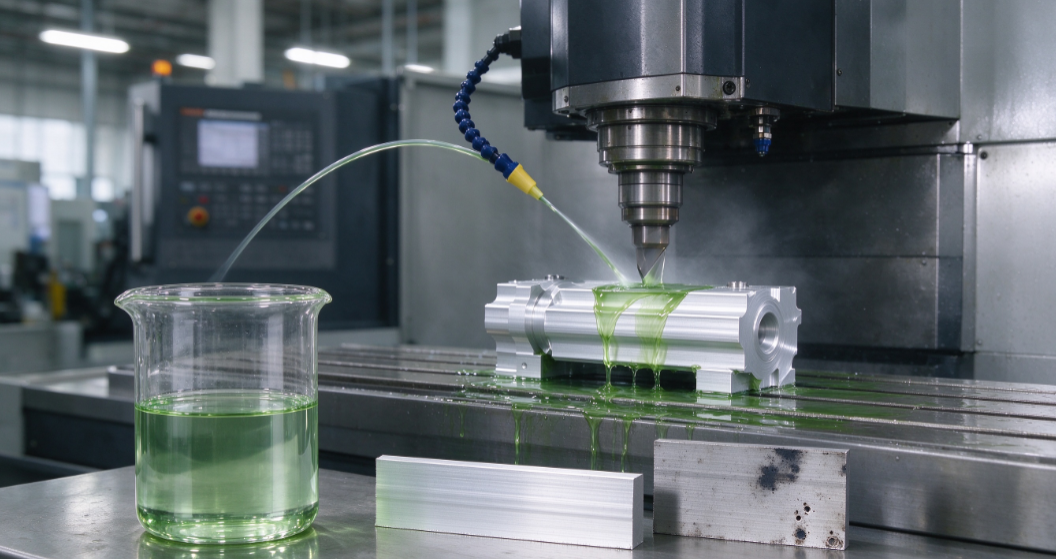
In the metalworking industry, blackening, pitting corrosion, whitening and loss of gloss on aluminum alloy workpieces after machining are common challenges encountered by numerous manufacturing practitioners. These defects are mostly attributed to improper selection of cutting fluids. Unlike ferrous metals such as carbon steel, aluminum alloy is a highly active amphoteric metal that imposes stringent compatibility requirements on cutting fluids. Random selection of unsuitable fluid products will easily trigger corrosion and scrap the finished aluminum parts, resulting in substantial production losses and increased manufacturing costs.
I. The Unique Sensitivity Of Aluminum Alloy: Chemical Properties Of Highly Active Amphoteric Metal
Aluminum features highly reactive chemical properties with an extremely low electrode potential, classifying it as a typical amphoteric metal that reacts chemically upon exposure to both acids and alkalis. Most conventional water-based cutting fluids available on the market turn alkaline after dilution with water, maintaining a pH range generally between 8.5 and 10. A dense native oxide protective film naturally forms on the surface of aluminum alloy substrates. Once this film comes into contact with highly alkaline cutting fluid, the protective oxide layer rapidly dissolves and peels off. The bare aluminum matrix without surface protection will then undergo continuous oxidation, blackening and various corrosive defects throughout the machining process.
II. Four Major Corrosion Triggers Caused By Improper Cutting Fluid Use: From pH Imbalance To Depletion Of Corrosion Inhibitors
Many machining workshops suffer from short service life of cutting fluids and high rejection rates of aluminum workpieces. The root cause often lies in inappropriate selection and operation of cutting fluids, rather than equipment failures or flawed machining processes. The primary corrosion triggers are summarized in the following four categories:
1. pH Value Imbalance: The Primary Cause Of Corrosion Aluminum alloy is extremely sensitive to the pH level of cutting fluid with an extremely narrow tolerance window. If the pH value is excessively high, the strong alkaline environment will continuously etch the aluminum substrate, leading to black discoloration and pockmark pits on workpiece surfaces. On the contrary, a low pH level will drastically weaken the bacteriostatic performance of the cutting fluid, allowing massive proliferation of bacteria and mold. This causes the fluid to turn foul, separate into layers and lose its functionality, greatly shortening the service cycle of the working fluid.
2. Residual Harmful Ions: Accelerating Electrochemical Corrosion Excess chloride ions in the cutting fluid formula exert strong corrosive effects on aluminum alloy and readily induce pitting corrosion on workpieces. Meanwhile, cation impurities including calcium, magnesium and sodium introduced from source water and raw materials will raise the overall electrical conductivity of the cutting fluid. This speeds up electrochemical reactions on the metal surface and continuously exacerbates corrosion deterioration.
3. Microbial Propagation: Aggravating Machining Defects Relevant metalworking research has verified that large quantities of microorganisms bred in degraded cutting fluid constitute a critical contributor to aluminum corrosion during machining. Continuous reproduction of bacteria and mold breaks the original emulsification stability system of cutting fluid, resulting in emulsion stratification and performance failure. This further worsens corrosion and oxidation of aluminum components.
4. Depletion Of Corrosion Inhibitors: Loss Of Protective Performance Aluminum-specific corrosion inhibitors incorporated in cutting fluids serve as the core protective ingredients for workpieces. Various cation impurities in water will continuously consume these active anti-corrosion components, leading to gradual decay of protective capability. Once the corrosion inhibitor is fully depleted, aluminum alloy workpieces are processed without anti-corrosion protection, and corrosive damage will emerge rapidly.
III. Four Core Criteria For Aluminum Alloy Cutting Fluid Selection: Precise Matching For Machining Characteristics
To eliminate blackening, corrosion and gloss loss on aluminum parts, the selected cutting fluid must meet four rigid indicators to precisely adapt to aluminum alloy machining characteristics:
1. Precisely Controllable Acidity And Alkalinity The optimal pH range for dedicated aluminum alloy cutting fluids is 8.2–9.5. This weakly alkaline range effectively prevents acid and alkali corrosion of aluminum materials while suppressing bacterial growth, balancing superior machining performance and long-term fluid stability.
2. Excellent Hard Water Resistance Excessively high hardness of process water will trigger cutting fluid stratification, precipitation and aggravated corrosion. Premium aluminum-grade cutting fluids feature powerful hard water tolerance, compatible with diverse water quality conditions and preventing impurities in water from compromising cutting performance and anti-corrosion protection.
3. Superior Biological Stability The formula integrates high-efficiency bacteriostatic and antifungal components to restrain microbial reproduction over extended periods. It fundamentally resolves common issues such as malodor, deterioration and stratification of cutting fluid, effectively extending the fluid replacement cycle and lowering overall production costs.
4. Specialized Corrosion Inhibitor Formula For Aluminum Different from universal metal cutting fluids, high-quality aluminum alloy cutting fluids are formulated with aluminum-specific corrosion inhibitors. These ingredients are tailored to the active chemical traits of aluminum materials, forming a protective film on workpiece surfaces during machining. This reliably prevents blackening, white spots, corrosion and oxidation, and maintains outstanding surface finish of finished parts.
IV. Conclusion: Compatibility And Corrosion Protection Are Core Priorities For Aluminum Alloy Machining
The core priority of aluminum alloy machining is not to pursue universal cutting fluids with extreme lubrication and cooling capacity, but to select products featuring reliable compatibility, outstanding anti-corrosion performance and stable chemical systems. Only cutting fluids with strictly controlled pH values, excellent hard water resistance, high biological stability and dedicated aluminum corrosion inhibitor formulations can completely resolve corrosion challenges in aluminum machining and improve the yield rate of finished workpieces.