 WhatsApp
 sales@unpchemicals.com
 +86 16638830202
Industry-Wide Operational Challenges
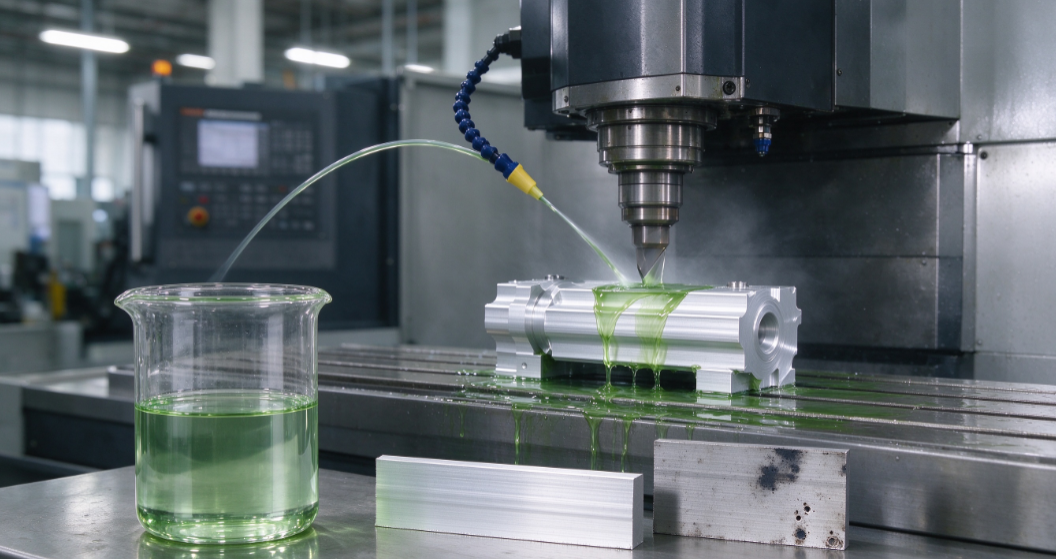
Aluminum-alloy machining frequently suffers typical workpiece defects including surface blackening, pitting corrosion, whitening and gloss fading. As a highly-active amphoteric metal, aluminum alloy reacts with both acid and alkaline environments, imposing strict compatibility constraints upon cutting-fluid systems. Improper fluid selection generates large-volume workpiece scrap and elevates overall manufacturing expenditure. Even with well-tuned mechanical equipment and optimized machining parameters, practical production still encounters multi-source risks: pH drift, harmful ion contamination, microbial spoilage and gradual consumption of special anti-corrosion components. Without purpose-tailored cutting-fluid additive packages, manufacturers face high reject rates and shortened service life of working fluids. Formulators require targeted additive chemistry to resolve these aluminum-specific machining bottlenecks.
What Are Metalworking-Fluid Additives
Metalworking-fluid additives are specialty chemical compounds that tailor the performance of cutting, grinding and forming fluids. Analogous to paraffin inhibitors modifying wax-crystal morphology without removing paraffin from crude oil: metalworking-fluid additives do not replace the cooling or dissolving properties of base fluid media. Instead they act at tool-workpiece interfaces and within the fluid bulk to enhance lubricity, load-carrying capacity and corrosion resistance.
Major categories of metalworking-fluid additives comprise lubricity additives, corrosion inhibitors, biocides, extreme-pressure additives and emulsifiers, each addressing distinct performance bottlenecks for oil-based, semi-synthetic and fully-synthetic machining systems.
Core Principles & Fundamental Classification
Aluminum-alloy-oriented metalworking-fluid additives are specialty chemical components designed to stabilize fluid physicochemical properties and build interfacial protection for amphoteric aluminum substrates. Analogous to paraffin inhibitors modifying wax-crystal morphology without removing paraffin from crude oil: aluminum-alloy machining-fluid additives cannot alter the intrinsic amphoteric chemical nature of aluminum alloy. Instead, they regulate bulk-fluid pH-buffering performance, suppress microbial proliferation, resist hard-water ion interference and adsorb onto aluminum surfaces to construct protective barrier films.
They fall into four primary application groups: - pH-buffering components: Maintain weakly-alkaline operating window and restrain drastic pH fluctuation within working fluids. - Hard-water-stabilizing additives: Mitigate adverse impacts induced by calcium, magnesium and other impurity ions from process water. - Biostatic and antifungal additives: Inhibit bacteria and mold reproduction inside water-dilutable metalworking fluids. - Aluminum-specific corrosion inhibitors: Surface-active components forming dedicated protective films for amphoteric aluminum-alloy workpieces.
Performance-Driven Working Mechanisms
Different additive categories realize performance improvement through distinct molecular pathways: - pH-buffering components: Stabilize cutting-fluid pH within the 8.2-9.5 weakly-alkaline target interval. Excessively high pH dissolves the native oxide film on aluminum and triggers alkali-etching corrosion; too-low pH weakens bacteriostatic capacity and accelerates fluid spoilage. Buffering additives balance anti-corrosion performance and biological stability simultaneously. - Hard-water-stabilizing additives: Sequester calcium, magnesium, sodium and chloride impurity ions introduced by make-up water and raw materials. They prevent ion-driven emulsion stratification, precipitation and accelerated electrochemical pitting corrosion on aluminum surfaces. - Biostatic and antifungal additives: Suppress massive reproduction of bacteria and mold. Microbial degradation breaks original emulsion systems, causes malodor and fluid phase separation, and indirectly aggravates aluminum corrosion; biostatic additives extend usable fluid service cycles. - Aluminum-specific corrosion inhibitors: Adsorb onto freshly-exposed aluminum-alloy surfaces during machining operations to form compact protective interfacial films. Such films isolate the amphoteric substrate from aggressive fluid phases and effectively avoid blackening, whitening, pitting and gloss-loss defects.
Consequences of Improper Additive Selection
Inadequate or mismatched additive selection brings multiple operational risks. Missing effective pH-buffering capability leads to pH drift outside the 8.2-9.5 safe window, triggering alkali etching or bacterial out-break. Insufficient hard-water-resistance additives allow harmful ions to accelerate electrochemical pitting. Lack of biostatic components causes rapid fluid deterioration, emulsion breakdown and secondary corrosion damage. When aluminum-targeted corrosion inhibitors get continuously consumed without replenishment, protective surface films disappear, and aluminum workpieces suffer direct corrosive attack. All these failure modes raise workpiece scrap ratios, shorten cutting-fluid service lifetime and increase comprehensive manufacturing costs.
Commercial Additive Portfolio Overview
Core functional additive families for aluminum-alloy machining cutting-fluid systems: - pH-buffer formulations for stabilizing weakly-alkaline working-fluid environments - Hard-water-tolerant stabilizers for mitigating interference from water-source impurity ions - Composite biostatic-antifungal packages restraining microbial degradation - Aluminum-specific corrosion-inhibitor grades forming dedicated protective films for amphoteric aluminum substrates
These multi-component additive combinations are formulated to satisfy four core indicators for aluminum-alloy cutting-fluid applications: controllable acidity-alkalinity, outstanding hard-water resistance, reliable biological stability and specialized anti-corrosion protection for aluminum substrates.
Critical Performance Metrics for Qualified Additives
Following the unified evaluation framework across UNPChemicals technical review series, high-quality aluminum-alloy machining-fluid additives shall meet four core performance metrics:
1. High efficiency at low treat rates: Achieve pH buffering, ion-sequestration, biostatic or anti-corrosion targets under economical additive dosage without deteriorating lubrication and cooling properties of base cutting fluids.
2. Broad formulation compatibility: Coexist stably with emulsifiers, lubricity agents and other co-additives; avoid emulsion destabilization or precipitation under variable water-quality conditions.
3. Robust environmental stability: Retain core functionality under long-term circulating service, continuous impurity ingress and temperature fluctuation within machining workshops.
4. Practical industrial processability: Suitable for batching during fluid production and maintain effectiveness after field dilution with on-site process water.
Application Domains & Formulation Selection Guidelines
These additive-enhanced cutting-fluid systems serve multiple aluminum-alloy manufacturing segments:
1. General aluminum-alloy cutting & turning operations: Prevent blackening, pitting and surface gloss loss for conventional aluminum workpiece machining.
2. Aluminum-alloy grinding and milling processes: Protect freshly-exposed active aluminum surfaces generated under high-material-removal-rate machining conditions.
3. Mass-production circulating cutting-fluid stations: Extend fluid service life via pH stabilization, hard-water tolerance and biological control for large-volume circulating-fluid systems.
Formulators and manufacturing engineers need to evaluate workpiece-alloy type, on-site process-water quality, circulating-fluid working mode and production-scale characteristics before final grade selection: - Prioritize reliable pH-buffering additive packages to hold pH within 8.2-9.5 weakly-alkaline interval for aluminum-alloy processing. - Deploy hard-water-resistance stabilizers if local make-up water carries high-concentration calcium, magnesium or chloride ions. - Adopt composite biostatic-antifungal additives for large-capacity circulating cutting-fluid tanks to resist microbial spoilage. - Select dedicated aluminum-specific corrosion-inhibitor formulations rather than general-purpose ferrous-metal inhibitors for aluminum-alloy workpiece protection.
UNPChemicals Full-Range Metalworking-Fluid Additive Portfolio
CSUM® Series Metal Corrosion Inhibitors
· CSUM 4200 (CAS 80584-88-9): Tolyltriazole derivative, water-soluble copper corrosion inhibitor / metal deactivator, alternative to solid benzotriazole and methylbenzotriazole for water-glycol systems.
· CSUM 5202 (CAS 55906-42-8): Fully water-soluble thiadiazole derivative with low viscosity and good extreme-pressure properties. Designed for fully-synthetic and semi-synthetic metalworking fluids, especially suitable for wire-drawing processes.
· CSUM 8150: Siloxane ketone oligomer. Delivers effective corrosion inhibition for aluminium and soldering-tin substrates within aqueous-based fluid environments.
PMET® Series Lubricity & Extreme-Pressure Additives
· PMET PE1650 (CAS 68909-67-1): Oleyl polyether phosphate ester, multi-functional environmentally-friendly surfactant integrating lubrication, EP-anti-wear, corrosion-inhibition, emulsification and dispersion performance for cutting, rolling and grinding fluids.
· PMET PE1690 (CAS 73038-25-2): Sulfur-free phosphorus-based ash-forming EP-anti-wear additive. Provides excellent load-bearing and lubricating properties plus moderate rust protection for lubricants, greases and neat metalworking fluids.
Concluding Remarks
Superior aluminum-alloy machining performance does not solely rely upon the lubricating and cooling capacity of base cutting fluids. It heavily depends on rationally compounded multi-functional additive packages addressing the unique amphoteric chemical traits of aluminum substrates. Properly selected pH-buffering, hard-water-stabilizing, biostatic and aluminum-specific corrosion-inhibitor additives suppress pitting, blackening and whitening defects, stabilize circulating-fluid quality, lower workpiece scrap ratios and reduce comprehensive production costs for aluminum-alloy manufacturing plants.
Contact UNPChemicals technical-sales team for datasheets, formulation recommendations and custom-grade support for your specific aluminum-alloy metalworking-fluid projects.