 WhatsApp
 sales@unpchemicals.com
 +86 16638830202
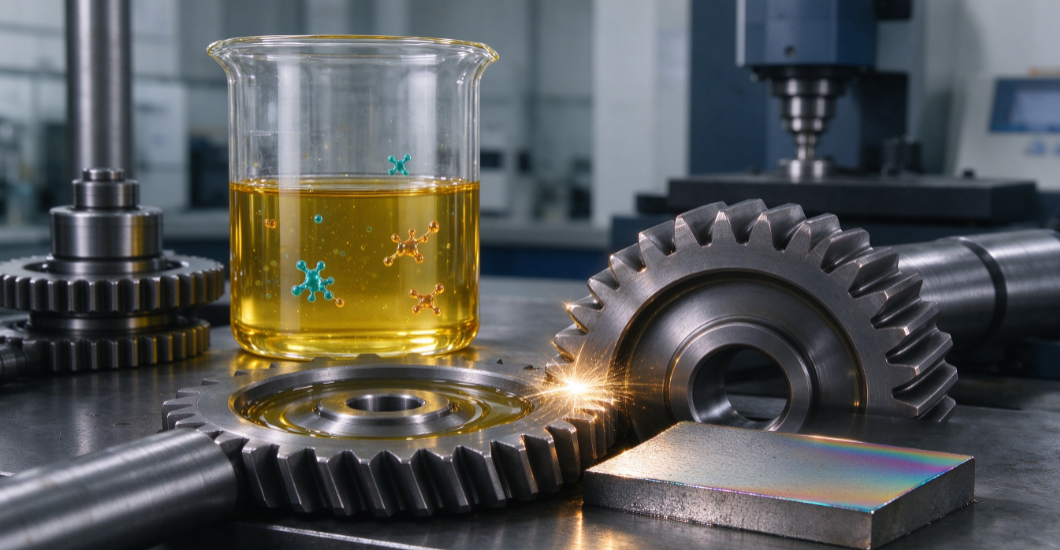
Lubricant additives refer to one or multiple chemical compounds incorporated into base lubricating oils. These additives are engineered to impart brand-new performance attributes to lubricants or enhance the inherent properties of the base stock. Among the wide array of functional additives deployed in lubricant formulations, antioxidant and corrosion inhibitors and extreme pressure anti-wear (EP/AW) agents stand as two of the most critical categories. This article focuses on the working principles, chemical types and application scenarios of these two additive families.
Antioxidant and Corrosion Inhibitors
Antioxidant and corrosion inhibitors are most commonly represented by zinc dialkyldithiophosphates (ZDDP), specifically the T202 and T203 product series. These organophosphorus-sulfur compounds are widely incorporated into engine oil formulations, delivering integrated antioxidant, anti-corrosion and anti-wear performance. By adjusting the carbon chain length of alkyl groups and modifying the molecular position of sulfur and phosphorus atoms within the chemical structure, manufacturers can derive variants with differentiated functional characteristics. Such modified ZDDP grades can also serve as extreme pressure anti-wear components in industrial lubricant systems. Normally, the required treat rate of these additives remains relatively low to achieve the target protective performance. When exposed to high-temperature operating environments, ZDDP decomposes gradually and forms a thin protective film on metal surfaces. This film prevents metal oxidation and corrosive attack triggered by acidic by-products generated from oil degradation, while mitigating micro-wear on contact surfaces.
Extreme Pressure Anti-Wear (EP/AW) Agents
Extreme pressure anti-wear agents are functional additives designed to maintain lubrication under harsh operating conditions where ordinary oiliness agents cease to work effectively. When mating mechanical components operate under high temperature, high speed, heavy load, or low-speed impact loading, the lubrication regime transitions into boundary lubrication. Under boundary lubrication conditions, the base oil film ruptures easily. Without proper protection, metal surfaces will suffer scoring, seizure, and in severe cases, excessive abrasion, scratching and galling. At this moment, the active chemical components inside extreme pressure anti-wear additives will react chemically with the metal substrate to form a low-melting, highly ductile reaction film. This reaction layer smoothes the metal contact surfaces and reduces movement resistance, lowering friction and wear. This phenomenon is often described as “chemical polishing” in the lubrication industry.
Commercially prevalent EP/AW additives are organic compounds containing active elements such as sulfur, phosphorus and chlorine. These substances form tough, smooth protective films on metal interfaces to reduce friction and wear, enabling friction pairs to withstand substantially higher loads. In addition, certain molybdenum salts, high-molecular-weight polymers and borate compounds also exhibit excellent extreme pressure and anti-wear properties for specialized lubricant applications.
Due to their relatively low thermal decomposition temperature, sulfur-phosphorus EP additives are typically formulated into gear oils and metalworking fluids. For crankcase engine oils, zinc dialkyldithiophosphate (ZDDP) has long remained the dominant anti-wear component. Nevertheless, as energy-saving requirements for engine oils keep rising, several additive suppliers have developed molybdenum-salt-based additives for engine lubricants. Their primary function is to reduce the friction coefficient of the lubricant system, cut frictional power loss and ultimately achieve fuel economy improvement for internal combustion engines.