 WhatsApp
 sales@unpchemicals.com
 +86 16638830202
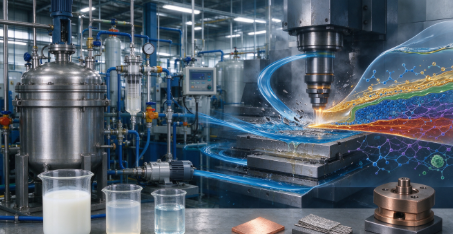
Industry-Wide Operational Challenges
Modern metalworking-fluid manufacturing faces multiple practical constraints: occupational health-safety risks from biocides and functional additives, increasingly stringent environmental compliance regulations, demands for balanced high-performance and cost-effective formulations, and microbial contamination risks inherent to water-miscible fluid systems. Merely mixing base fluids cannot satisfy diversified machining requirements. Without properly selected single-component specialty additives, finished metalworking fluids may trigger skin-respiratory hazards for operators, suffer rapid microbial spoilage, insufficient extreme-pressure lubrication or poor alloy-material compatibility. Formulators must select matching individual additives, coordinate base-fluid properties and production process parameters to resolve these formulation and manufacturing bottlenecks.
What is Metalwork Fluid?
Metalwork fluid is a specialized liquid used in various metalworking processes such as cutting, grinding, milling, drilling, and forming. It serves multiple crucial functions. Firstly, it acts as a coolant, dissipating the heat generated during the machining operations, which helps prevent overheating of the cutting tools and workpieces, thereby prolonging their lifespan and maintaining dimensional accuracy. Secondly, it functions as a lubricant, reducing the friction between the tool and the workpiece, enabling smoother cutting and reducing wear on both. Additionally, it helps flush away chips and debris from the cutting zone, preventing them from interfering with the machining process and causing surface defects or tool damage. Metalwork fluids can be water-based, oil-based, or synthetic formulations, each with its own set of advantages and disadvantages, and are chosen based on the specific requirements of the metalworking operation.
Core Principles & Fundamental Classification
Special-function single-component metalworking-fluid additives are concentrated individual chemical substances for performance upgrading during metalworking-fluid blending. Analogous to paraffin inhibitors modifying wax-crystal morphology without removing paraffin from crude oil: single-component additives cannot replace the intrinsic cooling and chip-flushing capacity of base fluids. Instead, individual molecules act at molecular and interfacial levels to deliver lubrication, extreme-pressure anti-wear, metal-deactivation, corrosion-inhibition and emulsification-dispersion effects.
According to functional orientation, these single-component additives are divided into five primary groups: - Oxidized vegetable-oil-based oily agents: Polymerized vegetable-derived oily components providing lubricity for metalworking-fluid systems. - Water-soluble triazole-series metal deactivators: Copper-alloy corrosion-suppressing additives for aqueous metalworking-fluid matrices. - Water-soluble thiadiazole-derivative extreme-pressure agents: EP functional components adapted for full-synthetic and semi-synthetic water-miscible fluids. - Polyether phosphate-ester multifunctional surfactants: Integrated lubricant, EP-anti-wear, corrosion-inhibitor, emulsifier-dispersant components. - Isomeric alcohol ether phosphate-ester anti-wear agents: Sulfur-free phosphorus-bearing extreme-pressure anti-wear additives for multi-category lubricant systems.
Performance-Driven Working Mechanisms
Different single-component additives realize performance improvement through distinct molecular pathways:
- Oxidized rapeseed-oil oily agents: Form orderly adsorbed oily films on metal contact interfaces, lowering friction during metal deformation and cutting processes; feature light-color, stable-viscosity and low-acid-value characteristics for oil-based machining-fluid formulations.
- Tolyltriazole-derivative metal deactivators: Dissolve within water-glycol systems; adsorb onto copper-alloy surfaces to form compact protective barrier films, restraining copper corrosion as an alternative to solid benzotriazole / methyl benzotriazole.
- Water-soluble thiadiazole derivatives: Exhibit excellent water compatibility; generate tribochemical protective films under machining pressure-temperature conditions, delivering extreme-pressure protection for oil-free full-synthetic and low-oil semi-synthetic fluids, especially for wire-drawing working conditions.
- Oleyl polyether phosphate-ester multifunctional surfactants: Possess amphiphilic molecular structure; simultaneously realize boundary-lubrication, extreme-pressure anti-wear, corrosion-inhibition, emulsification and contaminant dispersion within metalworking-fluid systems.
- Isomeric alcohol ether phosphate esters: Sulfur-free phosphorus-containing components; form phosphorus-rich tribological reaction films under boundary-lubrication conditions to improve load-bearing and anti-wear performance, while providing auxiliary rust-inhibition effects.
Consequences of Improper Additive Selection
Inadequate or mismatched single-component additive selection brings multiple operational risks. Incompatibility between additive and base-fluid or co-additives triggers phase separation, precipitation or emulsion destabilization. Insufficient extreme-pressure additive dosage causes accelerated tool wear and poor workpiece surface finish. Unsuitable water-soluble metal-deactivator grades lead to copper-alloy component corrosion. Improper additive selection may introduce skin-irritation or respiratory risks for on-site operators, or render finished fluids unable to satisfy environmental regulatory requirements. For water-miscible systems, poorly matched additive combinations aggravate microbial breeding, fluid malodor and shortened service life. All these failures raise workpiece reject ratios and increase comprehensive manufacturing costs for machining workshops.
Commercial Additive Portfolio Overview
- OSUM 400 / OSUM 600 (Oxidized rapeseed oil): High-purity polymerized rapeseed-oil oily agent; light-colored, stable-viscosity, low-acid-value for metalworking-fluid formulations.
- CSUM 4200 (Tolyltriazole derivatives, TTA, CAS 80584-88-9): Water- and glycol-soluble copper-corrosion inhibitor / metal deactivator; alternative to solid benzotriazole-type products.
- CSUM 5202 (Thiadiazole derivatives, CAS 55906-42-8): Fully water-soluble thiadiazole derivative; low-viscosity, good extreme-pressure performance; suitable for full-synthetic, semi-synthetic fluids, particularly wire-drawing processes.
- PMET PE1650 (Oleyl polyether phosphate ester, CAS 68909-67-1): Multifunctional environmental-friendly surfactant integrating lubrication, EP-anti-wear, corrosion-inhibition, emulsification and dispersion; applied in cutting-, rolling- and grinding-fluid systems.
- PMET PE1310 (Isomeric alcohol ether phosphate ester, CAS 78330-24-2): Sulfur-free phosphorus-containing extreme-pressure anti-wear additive with auxiliary rust-inhibition; usable for engine oils, industrial lubricants, neat-oil metalworking fluids and greases.
Critical Performance Metrics for Qualified Single-Component Additives
Following the unified evaluation framework across UNPChemicals technical review series, high-quality single-component metalworking-fluid additives shall meet four core performance metrics:
1. High efficiency at low treat rates: Achieve target oily-lubrication, extreme-pressure anti-wear or metal-deactivation performance under economical additive dosage.
2. Broad formulation compatibility: Chemically compatible with mineral, synthetic, emulsified, semi-/full-synthetic base fluids and other co-additives; avoid precipitation, emulsion breakdown or undesirable phase separation.
3. Robust environmental stability: Retain core functionality under machining heat, shear and long-term circulating conditions; meet occupational-health and environmental-protection regulatory constraints.
4. Practical industrial processability: Appropriate physical state for metering and blending in metalworking-fluid production vessels; easy-to-implement quality-control verification during manufacturing.
Application Domains & Formulation Selection Guidelines
These single-component additive systems serve multiple metal-manufacturing segments:
1. Cutting & Drilling Operations: Improve tool service life, surface quality and heat dissipation performance for turning, drilling processes.
2. Grinding & Milling Processes: Reduce friction, enhance chip removal and protect tools-workpieces during milling and grinding.
3. Shaping & Forming Processes (Wire-Drawing, Stamping): Provide heavy-duty boundary-lubrication for metal deformation scenarios such as wire-drawing.
Formulators need to evaluate base-fluid category, machining operation mode, workpiece-alloy type, together with health-safety-environmental-regulatory requirements before grade selection: - Choose OSUM 400 / OSUM 600 when vegetable-oil-based oily-lubricity improvement is required. - Adopt CSUM 4200 for water-system formulations requiring copper-alloy corrosion inhibition. - Deploy CSUM 5202 for full-synthetic / semi-synthetic fluids, especially wire-drawing production conditions. - Select PMET PE1650 when integrated multi-functionality (lubrication, EP-anti-wear, emulsification-dispersion) is demanded for cutting / rolling / grinding fluids. - Use PMET PE1310 for sulfur-free phosphorus-bearing extreme-pressure anti-wear demands across lubricant and neat-oil metalworking-fluid formulations.
Concluding Remarks
High-performance metalworking fluids rely not merely on base-fluid cooling and chip-flushing capability but also on rational screening and matching of single-component specialty additives throughout the metalworking-fluid blending workflow. Oxidized-rapeseed-oil oily agents, water-soluble metal-deactivators, thiadiazole-series extreme-pressure components and phosphate-ester multifunctional surfactants deliver interfacial lubrication, anti-wear, corrosion-protection and emulsification-dispersion functions. Correct additive selection helps manufacturers address key manufacturing-sector challenges including occupational-health risks, environmental-compliance requirements and water-miscible-fluid microbial-contamination threats, supporting stable production of qualified cutting, grinding and forming-oriented metalworking-fluid products.
Contact UNPChemicals technical-sales team for datasheets, formulation recommendations and custom-grade support for your specific metalworking-fluid-manufacturing projects.