 WhatsApp
 sales@unpchemicals.com
 +86 16638830202
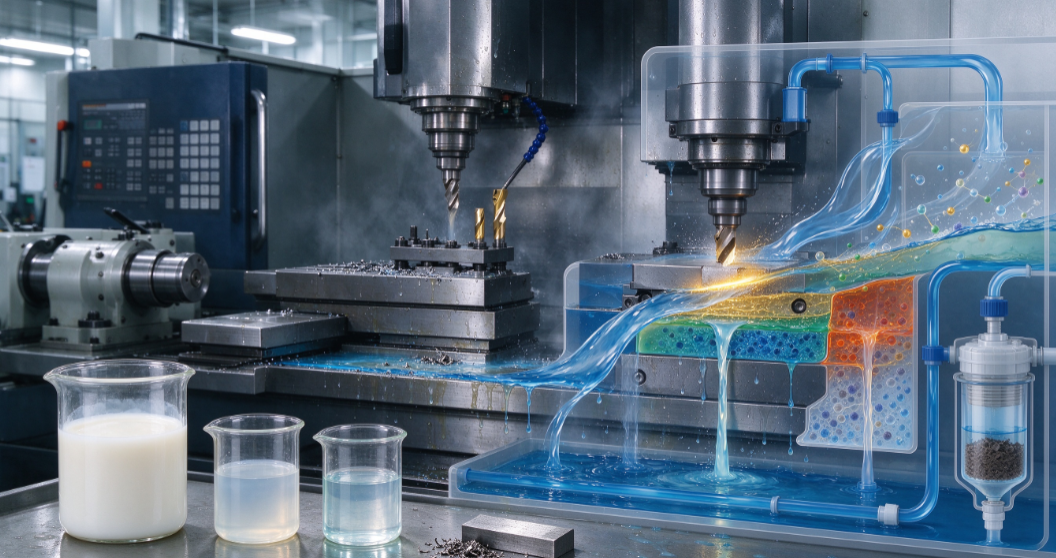
Industry-Wide Operational Challenges
Automotive, aerospace, tool-and-die and precision manufacturing industries face combined severe conditions including high cutting temperature, heavy contact load, chip abrasion and microbial contamination during metal-removal and forming operations. Base metalworking fluid alone cannot satisfy comprehensive machining demands. Without properly compounded metalworking-fluid additive-package solutions, manufacturers suffer accelerated tool wear, poor workpiece surface finish, fluid deterioration induced by microorganism reproduction, metal corrosion risk and frequent fluid replacement, which bring extra production downtime and higher comprehensive manufacturing costs. Formulators rely on pre-blended multi-functional additive packages to simplify formulation development and achieve balanced performance for water-based and oil-based machining fluids.
What is Metalwork Fluid?
Metalwork fluid is a specialized liquid used in various metalworking processes such as cutting, grinding, milling, drilling, and forming. It serves multiple crucial functions. Firstly, it acts as a coolant, dissipating the heat generated during the machining operations, which helps prevent overheating of the cutting tools and workpieces, thereby prolonging their lifespan and maintaining dimensional accuracy. Secondly, it functions as a lubricant, reducing the friction between the tool and the workpiece, enabling smoother cutting and reducing wear on both. Additionally, it helps flush away chips and debris from the cutting zone, preventing them from interfering with the machining process and causing surface defects or tool damage. Metalwork fluids can be water-based, oil-based, or synthetic formulations, each with its own set of advantages and disadvantages, and are chosen based on the specific requirements of the metalworking operation.
Core Principles & Fundamental Classification
Metalworking-fluid additive packages are pre-formulated multi-component chemical blends for performance upgrading of base metalworking-fluid matrices. Analogous to paraffin inhibitors modifying wax-crystal morphology without removing paraffin from crude oil: metalworking-fluid additive packages do not replace the intrinsic cooling-washing capacity of base machining fluids. Instead, multiple functional ingredients work synergistically at molecular and interfacial levels to realize boundary-lubrication protection, corrosion suppression and microbial control.
They fall into three primary application groups according to base-fluid matching orientation: - Emulsified-oil additive packages: Tailored compound blends for emulsified-oil metalworking-fluid systems. - Semi-synthetic additive packages: Multi-component combinations adapted for semi-synthetic machining-fluid formulations. - Fully-synthetic additive packages: Advanced blended components for high-performance fully-synthetic metalworking-fluid products.
Major functional components inside these packages cover anti-wear / extreme-pressure agents, rust-corrosion inhibitors and biocides.
Performance-Driven Working Mechanisms
Different functional components within blended metalworking-fluid additive packages realize performance improvement through distinct molecular pathways: - Anti-wear & Extreme-Pressure Components: Adsorb onto metal surfaces within cutting zones. Under high pressure and high-temperature machining conditions, they form durable interfacial protective films, lower friction coefficient and block direct metal-to-metal contact, mitigating tool abrasion and workpiece surface damage. - Rust and Corrosion Inhibitors: Generate protective barrier layers via physical adsorption or mild chemical reaction on metal surfaces. Such barriers isolate metal substrates from moisture and oxygen, restraining oxidation and corrosion risk for workpieces and machine-tool components. - Biocide Components: Suppress or eliminate microorganism reproduction inside water-dilutable circulating fluids. They avoid biofilm accumulation which may block coolant pipelines and impair heat-transfer efficiency, extending the usable service life of circulating metalworking fluids. - Auxiliary synergistic components: Optimize heat-transfer characteristics of base fluids, promoting efficient heat dissipation generated during high-speed cutting processes.
Consequences of Improper Additive-Package Selection
Inadequate or mismatched additive-package selection brings multiple operational risks. Chemical incompatibility between additive package and base fluid triggers phase separation, heavy precipitation or excessive foaming and destroys fluid stability. Insufficient extreme-pressure protection leads to rapid tool wear and poor surface quality of machined parts. Lack of effective corrosion-inhibitor ingredients induces rust and corrosion on workpieces and machine tools. Inadequate biocide capacity causes massive microbial breeding, fluid spoilage and filter-line clogging. All these failure modes raise reject ratios of finished parts, shorten fluid service cycles and increase overall manufacturing expenditure for machining workshops.
Commercial Additive Portfolio Overview
- UNP MW911: Emulsified-oil additive package, specially formulated for emulsified-oil metalworking-fluid systems. Delivers outstanding lubricity to cope with high-friction and high-stress conditions in metal cutting and forming processes. - UNP MW922: Semi-synthetic additive package, designed for semi-synthetic metalworking fluids. Provides superior lubricating performance for metal stamping, forging and precision-machining scenarios. - UNP MW933: Fully-synthetic additive package, composed of advanced chemical components for high-performance fully-synthetic metalworking-fluid formulation projects.
Critical Performance Metrics for Qualified Additive Packages
Following the unified evaluation framework across UNPChemicals technical review series, high-quality metalworking-fluid additive packages shall meet four core performance metrics:
1. High efficiency at low treat rates: Achieve anti-wear, extreme-pressure, anti-corrosion and biostatic targets under economical dosage without deteriorating cooling and chip-flushing properties of base metalworking fluids.
2. Broad formulation compatibility: Good mutual compatibility among internal ingredients; stable solubility and dispersion within emulsified-oil, semi-synthetic and fully-synthetic base fluids; prevent phase separation, sediment and excessive foam.
3. Robust environmental stability: Retain comprehensive functional performance under high cutting temperature, continuous chip contamination and long-term circulating service conditions.
4. Practical industrial processability: Convenient for batching during fluid production; finished fluids shall comply with local industrial safety and environmental regulatory requirements such as OSHA specifications.
Application Domains & Formulation Selection Guidelines
These additive-package systems serve multiple metal-manufacturing segments:
1. Automotive and Aerospace Manufacturing: Formulate machining fluids for engine components, chassis parts and aircraft structural-part processing to guarantee machining precision and tool durability.
2. Tool-and-Die Making: Supply extreme-pressure protection for hardened-steel and high-strength-material machining in mold-and-die production.
3. General Metal Fabrication: Support diversified cutting, bending and welding-auxiliary machining tasks from small-batch custom work to mass-production workshops.
4. Precision Machining (Electronics & Medical Devices): Satisfy strict tolerance and high-quality surface-finish requirements for high-precision component manufacturing.
Formulators need to evaluate machining operation modes, workpiece material characteristics, cutting parameters, base-fluid category and local safety-environmental regulations before grade selection: - Choose UNP MW911 when developing emulsified-oil-based metalworking fluids for conventional cutting-forming operations. - Adopt UNP MW922 for semi-synthetic fluid formulation oriented to stamping, forging and moderate-load precision-machining. - Select UNP MW933 for high-performance fully-synthetic metalworking-fluid projects for high-precision and heavy-duty machining scenarios.
Concluding Remarks
Excellent metalworking-fluid performance does not merely rely on the cooling and chip-removal capability of base fluids, but also depends on rationally compounded multi-functional additive-package design. Pre-blended metalworking-fluid additive packages integrate extreme-pressure anti-wear, anti-corrosion and biocontrol functions. Proper grade selection simplifies formulation workflows, protects cutting tools and workpieces, stabilizes circulating-fluid quality and helps manufacturers obtain high-precision finished parts while complying with occupational-safety and environmental requirements.
Contact UNPChemicals technical-sales team for datasheets, formulation recommendations and custom-grade support for your specific metalworking-fluid-formulation projects.