 WhatsApp
 sales@unpchemicals.com
 +86 16638830202
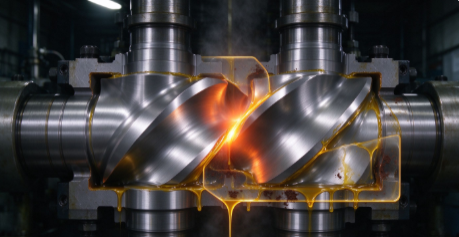
Industry-Wide Operational Challenges
Light-duty and heavy-duty compressor equipment operates under continuous high-temperature compression conditions. Compressor oil is repeatedly exposed to heat, oxygen and catalytic metal-ion contamination, which easily trigger oil oxidative degradation, sludge, varnish and carbon deposit build-up. Base oil alone cannot satisfy comprehensive compressor protection requirements. Without properly selected single-component specialty additives, finished compressor oils will suffer rapid thermal-oxidative deterioration, carbon deposition, shortened fluid service life and potential equipment safety hazards. Formulators must select matching individual additives, coordinate base-oil properties and compressor operating parameters to resolve these compressor-oil formulation and manufacturing bottlenecks.
What is Compressor-Oil Additive?
Compressor-oil additives are chemical compounds incorporated into base oils to upgrade the performance of light-duty and heavy-duty compressor oils. They improve thermal-oxidative stability, suppress carbon and varnish deposit formation, deliver metal-deactivation anti-corrosion performance, enhance wear resistance and extend service life for various compression equipment.
Core Principles & Fundamental Classification
Special-function single-component compressor-oil additives are concentrated individual chemical substances for performance upgrading during compressor-oil blending. Analogous to paraffin inhibitors modifying wax-crystal morphology without removing paraffin from crude oil: single-component additives cannot replace the intrinsic cooling-lubrication capacity of base oils. Instead, individual molecules act at molecular and interfacial levels to realize high-temperature antioxidation, metal-ion passivation, metal-deactivation and auxiliary extreme-pressure anti-wear effects.
According to functional orientation, these single-component additives are divided into three primary groups: - Thiadiazole-series ashless multi-functional additives: Integrates extreme-pressure, antioxidation and metal-deactivation performance. - Benzotriazole-derivative metal-ion suppression additives: Inhibit metal-ion-catalyzed oil oxidation inside compressor systems. - Ashless amine-type high-temperature antioxidants: Sulfur-phosphorus-free high-efficiency antioxidants for harsh high-temperature compression environments.
Performance-Driven Working Mechanisms
Different single-component additives realize performance improvement through distinct molecular pathways:
- Thiadiazole tert-dodecyl mercaptan condensate (DMTD-12): Ashless organosulfur additive. Adsorbs onto metal surfaces to form compact protective barrier films to achieve metal-deactivation anti-corrosion effect; meanwhile provides auxiliary extreme-pressure and antioxidation performance, mitigating component corrosion under high-temperature cyclic compression conditions.
- Benzotriazole derivatives (CSAIL T551): Adsorb onto metal surfaces to isolate catalytic metal ions released by compressor friction pairs. Effectively restrain metal-ion-accelerated oxidation chain-reactions of compressor oil, slow oil deterioration and prolong circulating service life.
- Octyl phenyl-α-naphthylamine (OSAIL L060): Sulfur-phosphorus-free ashless amine antioxidant with low-volatility and outstanding high-temperature oxidation-resistance. Scavenges oxidative free-radicals generated under high-temperature compression environment, interrupting oxidation chain-reactions, restraining base-stock degradation, reducing sludge, varnish and carbon deposit formation, and maintaining stable oil viscosity under long-term harsh thermal conditions.
Consequences of Improper Additive Selection
Inadequate or mismatched single-component additive selection brings multiple operational risks. Incompatibility between additive and base-oil or co-additives triggers precipitation, sediment and performance decay. Insufficient high-temperature antioxidation capacity causes rapid compressor-oil aging, massive carbon-varnish deposit accumulation, which may block compressor pipelines and valves. Lack of metal-deactivator ingredients leads to metal-ion catalytic oxidation and metal-component corrosion. Improper additive combinations cause finished compressor oils to fail relevant industry specifications. All these defects increase equipment failure risk and raise maintenance expenditure for end-users.
Commercial Additive Portfolio Overview
- DMTD-12 (Thiadiazole tert-dodecyl mercaptan condensate, CAS 59656-20-1): Ashless multi-functional lubricant additive with extreme-pressure, antioxidation and metal-deactivator performance; prevents metal corrosion for automotive-industrial lubricants and metalworking fluids.
- CSAIL T551 (Benzotriazole derivatives, CAS 15497-45-7): High-performance benzotriazole-derivative additive; inhibits metal-ion catalytic oxidation to extend service life of circulating compressor oils and other industrial lubricants.
- OSAIL L060 (Octyl phenyl-α-naphthylamine, CAS 68259-36-9): Sulfur-phosphorus-free ashless amine antioxidant; low-volatility, excellent oil-solubility and superior high-temperature oxidation-resistance; suppresses sludge and carbon-varnish generation, widely used in compressor oils, other industrial-synthetic lubricants and greases.
Critical Performance Metrics for Qualified Single-Component Additives
Following the unified evaluation framework across UNPChemicals technical review series, high-quality single-component compressor-oil additives shall meet four core performance metrics:
1. High efficiency at low treat rates: Achieve high-temperature antioxidation, metal-passivation or anti-corrosion targets under economical additive dosage.
2. Broad formulation compatibility: Chemically compatible with mineral / synthetic base-oils and other co-existing additives; avoid precipitation, antagonistic side-reactions and seal-material deterioration.
3. Robust environmental stability: Retain core functional performance under sustained high-temperature compression, thermal cycling and metal-ion-contamination compressor-service conditions.
4. Practical industrial processability: Suitable physical state for metering and blending in compressor-oil production facilities; convenient quality-control verification during manufacturing.
Application Domains & Formulation Selection Guidelines
These single-component additive systems serve multiple compressor-oil manufacturing segments:
1. Light-duty compressor oils: Formulation for general-purpose air-compressor circulating lubricants under moderate-temperature working conditions.
2. Heavy-duty compressor oils: High-temperature resistant compressor-oil formulations for heavy-load continuous-operation compression equipment.
3. Associated auxiliary products: Matching general industrial lubricants and grease formulations.
Formulators need to evaluate compressor load grade, continuous-operating temperature range, metal-component characteristics and target industry-specification requirements before grade selection: - Choose OSAIL L060 when strong high-temperature antioxidation and carbon-deposit-suppression performance is required for heavy-duty compressor-oil projects. - Deploy CSAIL T551 for compressor-oil formulations facing prominent metal-ion catalytic-oxidation risks. - Add DMTD-12 when both metal-deactivation anti-corrosion and auxiliary extreme-pressure antioxidation functions are needed.
Concluding Remarks
Reliable compressor-oil performance relies not merely on base-oil thermal-stability properties but also on rational screening and matching of single-component specialty additives in blending workflows. Thiadiazole-series metal-deactivators, benzotriazole-derivative metal-ion suppressors and high-temperature amine antioxidants jointly realize high-temperature antioxidation, carbon-varnish-deposit inhibition and metal-corrosion-protection functions. Correct additive-grade selection helps formulators satisfy performance requirements for light-duty and heavy-duty compressor oils, restrain high-temperature carbon-deposit generation, protect compressor components and extend service life of compression equipment.
Contact UNPChemicals technical-sales team for datasheets, formulation recommendations and custom-grade support for your specific compressor-oil-formulation projects.