 WhatsApp
 sales@unpchemicals.com
 +86 16638830202
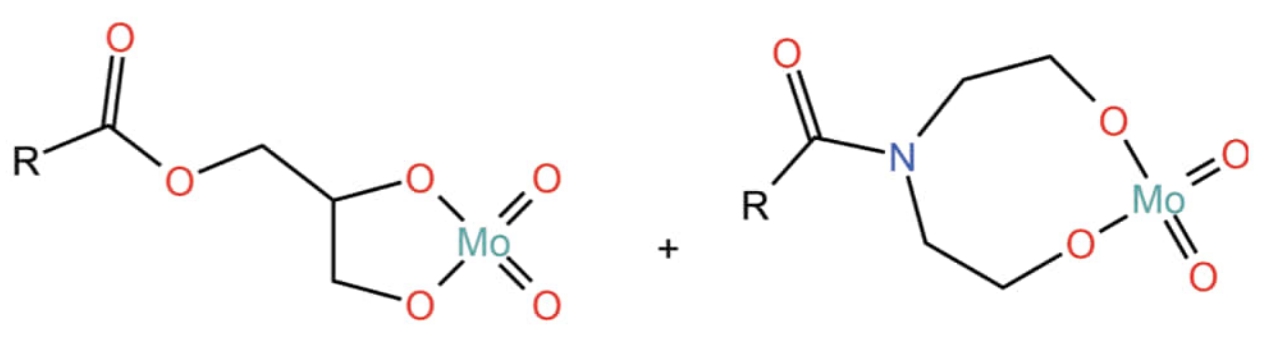
MSAIL 8550 synergizes with sulfur-containing additives, significantly enhancing the anti-friction and anti-wear properties of lubricating oils
Introduction
Modern lubricant engineering faces a multi-objective optimization challenge: achieving ultra-low friction for energy efficiency, providing robust wear protection under high loads, ensuring oxidative stability, and meeting environmental regulations—all within a single formulation. Individual additives often excel in one area but may lack in another or present compatibility issues. Therefore, exploiting positive synergistic interactions between carefully selected additives is a cornerstone of advanced lubricant development. A particularly impactful synergy exists between friction-modifying organomolybdenum compounds and traditional sulfur-based anti-wear/extreme pressure (AW/EP) agents.
MSAIL 8550(CAS 445409-27-8), an S/P-free organomolybdenum complex, is reported to "synergize with sulfur-containing additives, significantly enhancing the anti-friction and anti-wear properties of lubricating oils." This claim suggests a powerful cooperative effect that could unlock superior tribological performance. This paper aims to deconstruct this synergy. We will explore the mechanistic hypotheses explaining how MSAIL 8550 interacts with sulfur additives at the molecular and surface levels to create a more effective protective film. Furthermore, we will outline a validation framework to measure this synergy and conclude by discussing its significant value in formulating high-performance lubricants for demanding applications.
Defining the Synergistic System: MSAIL 8550 and Sulfur-Containing Additives
The synergy involves two key players:
MSAIL 8550: A friction modifier whose primary tribological action is believed to be the tribocatalytic formation of molybdenum disulfide (MoS₂) lamellar solids on contact surfaces.
Sulfur-Containing Additives: A broad class including:
Zinc Dialkyldithiophosphates (ZDDP): The ubiquitous multi-functional additive providing AW/EP protection via the formation of polyphosphate glass films.
Sulfurized Olefins, Esters, or Fats: Common EP agents that react with metal surfaces under high stress/temperature to form iron sulfide (FeS) films, preventing adhesive wear and scuffing.
The synergy implies that the combined effect of MSAIL 8550 and a sulfur additive (e.g., ZDDP) on friction and wear is greater than the sum of their individual effects.
Mechanistic Analysis of the Synergy
The enhanced performance is not coincidental but rooted in complementary and interactive surface chemistry.
1. Complementary Film-Forming Mechanisms:
Sulfur Additives (e.g., ZDDP): Form primarily iron polyphosphates and iron/ zinc sulfates/ sulfides. These films are effective at preventing adhesive wear and distributing load but can have relatively high shear strength, contributing to boundary friction.
MSAIL 8550: Forms primarily MoS₂. This lamellar solid has very low interlayer shear strength, excellent for friction reduction, but its pure form may have limitations in extreme pressure situations compared to phosphate glasses.
2. The Synergistic Interaction: Creating a Superior Composite Film
The key hypothesis is that under tribological stress, the two additive systems interact to form a mixed or composite boundary film with optimized properties.
Co-absorption and Reaction: Both additives compete for and co-absorb on the nascent metal surface. The local high temperature and catalytic activity of freshly exposed iron may facilitate reactions not only within each additive class but between them.
Formation of a Mo-S-P-O-Zn-Fe Composite Film: Analytical studies (e.g., XPS, TEM) on surfaces lubricated by Mo-containing and ZDDP blends have revealed films containing molybdenum in various states alongside phosphorus, sulfur, zinc, and oxygen. It is postulated that molybdenum species (from MSAIL 8550 decomposition) may incorporate into the growing polyphosphate network or form thiomolybdates/molybdenum oxysulfides.
Enhanced Film Properties:
Lower Friction: The incorporation of low-shear MoS₂ domains or related structures into the tougher phosphate/sulfide matrix reduces the overall shear strength of the composite film compared to a pure ZDDP film.
Improved Wear Protection: The composite film is potentially more tenacious, coherent, and resistant to removal. The Mo-S species may act as "solid lubricant platelets" within a "ceramic-like" phosphate glass, improving its resilience and load-carrying capacity. This creates a film that is both slippery and tough.
3. The Role of "S/P Free" Design in MSAIL 8550: This characteristic is crucial. By being free of its own active sulfur/phosphorus, MSAIL 8550 avoids competitive interference with the thermal decomposition and film-forming pathways of the primary sulfur additive (like ZDDP). Instead, it provides a "clean" molybdenum source that can interact optimally with the sulfur and phosphorus generated from the partnered additive, leading to a more controlled and efficient synergy.
Expected Results and Discussion
Expected Data: The synergistic blend (MSAIL 8550 + Sulfur Additive) is predicted to yield:
A WSD reduction of 20-40% compared to the sulfur additive alone at the same total additive treat level.
A friction coefficient reduction of 15-30% under boundary lubrication conditions compared to the sulfur additive alone.
An increase in Last Non-Seizure Load or Weld Load in EP testing.
Discussion: The superior performance would be directly correlated with the formation of the hypothesized composite film. The presence of Mo in the surface film, as confirmed by XPS, would be strong supporting evidence. The discussion would center on how the synergy allows the formulation to meet dual targets: surpassing the wear protection of a friction modifier and the friction reduction of a traditional AW/EP agent.
Application Implications and Conclusion
Application Implications:
This synergy has direct, practical value:
Formulation Efficiency: Achieve target performance (e.g., specific WSD and friction goals) with lower total additive treat rates, potentially improving compatibility and cost-effectiveness.
Performance Enabling: Develop lubricants for ultra-severe applications (e.g., high-performance racing engines, heavily loaded industrial gears) where the composite film provides a critical safety margin against scuffing and wear while maintaining efficiency.
Balanced Performance: Create engine oils that simultaneously achieve excellent fuel economy (via low friction) and outstanding valve train wear protection (via enhanced anti-wear film).
Conclusion:
The synergy between MSAIL 8550 and sulfur-containing additives represents a powerful tool in tribological design. It moves beyond simple additive blending into the realm of cooperative surface engineering. By facilitating the formation of a Mo-S-P-O composite boundary film, this synergy delivers a dual benefit: significantly enhanced wear protection coupled with substantially reduced friction. This mechanistic understanding, when validated through systematic testing, provides a clear rationale for incorporating MSAIL 8550 into formulations alongside traditional sulfur-based AW/EP agents. It enables the development of next-generation lubricants that are not only more protective but also more efficient, addressing the core challenges of modern machinery.