 WhatsApp
 sales@unpchemicals.com
 +86 16638830202
The Friction Challenge in Modern Lubrication
In engines, gearboxes, compressors and high-load industrial systems, a large share of energy is lost not to bulk viscosity but to boundary friction — the metal-to-metal contact that occurs when the oil film thins under high load, low speed or elevated temperature. Left unmanaged, boundary friction raises fuel and power consumption, generates heat, accelerates wear and shortens component life. Base oils and conventional additive packages alone cannot fully solve this problem, because they are designed to carry load hydrodynamically rather than to protect surfaces when the film breaks down. This is where friction modifiers become essential. Among the available chemistries, oil-soluble organic molybdenum compounds have earned a reputation as the most effective class for reducing the coefficient of friction while delivering useful anti-wear and antioxidant side benefits. Choosing the right grade, however, requires more than looking at a molybdenum number on a datasheet.
What Is an Organic Molybdenum Friction Modifier?
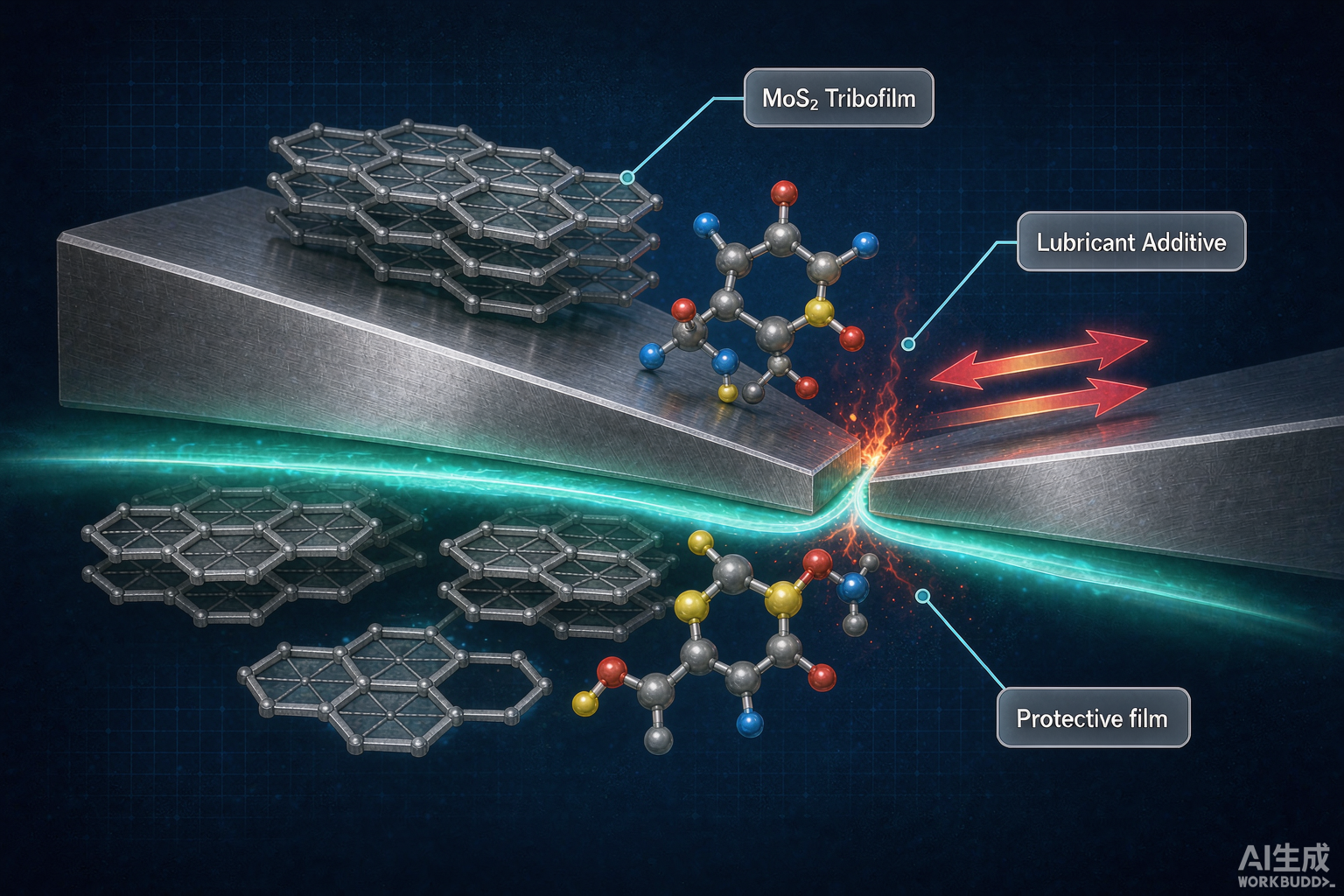
An organic molybdenum friction modifier is an oil-soluble organometallic additive in which a molybdenum atom is chemically bonded to sulfur- and/or phosphorus-containing ligands. Unlike solid molybdenum disulfide (MoS2) powder, which must be suspended in the lubricant, these compounds dissolve molecularly in the base oil and decompose at the contact interface to generate a protective tribofilm. Under boundary lubrication, the molecule adsorbs onto the metal surface and, through tribochemical reaction, forms a layered MoS2-rich film with very low shear strength. Sliding then occurs between these easy-to-shear layers instead of between metal asperities, which sharply lowers friction and wear. Depending on the ligand chemistry, the same molecule can also provide extreme pressure (EP), anti-wear and oxidation-inhibition performance, making organic molybdenum a genuinely multifunctional additive. Common families include molybdenum dithiophosphate (MoDTP), molybdenum dithiocarbamate (MoDTC), long-chain MoDTC, and sulfur/phosphorus-free organomolybdenum complexes, plus ashless boron-based friction modifiers used in synergy.
Core Chemistry and Fundamental Classification
Organic molybdenum friction modifiers are best understood by their ligand family, because the ligand determines elemental composition, reactivity and compatibility:
- Molybdenum dithiophosphate (MoDTP): Sulfur- and phosphorus-containing grades that combine strong friction reduction with EP, anti-wear and antioxidant function. Typical examples: MSAIL 300L (Mo 9.1%, S 11.3%, P 3.2%, CAS 72030-25-2) and MSAIL 300LB (Mo 8.0%, S 12.0%, P 6.0%, CAS 68958-92-9).
- Molybdenum dithiocarbamate (MoDTC): Phosphorus-free grades favored where phosphorus must be limited. MSAIL 525A (Mo 10.0%, S 11.0%, P-free, CAS 253873-83-5) is a standard choice; MSAIL 525B (Mo 10.0%, S 10.7%, P-free, CAS 71342-89-7) is a long-chain variant with enhanced oil solubility.
- Organomolybdenum complex (S/P-free): Sulfur- and phosphorus-free, environmentally oriented chemistry such as MSAIL 8550 (Mo 7.9%, CAS 445409-27-8), notable for friction reduction, compatibility with sulfur additives and antioxidant synergism.
- Ashless borate ester: A nitrogen-containing borate ester such as FMET 2890 (B 1%, N 2.4%), sulfur- and phosphorus-free, used at low treat rates in synergy with organic molybdenum to further reduce the friction coefficient.
How the Tribofilm Works: Performance-Driven Mechanisms
The practical value of organic molybdenum lies in what happens at the surface. When the lubricant enters the boundary regime, local temperature and pressure trigger the molybdenum compound to decompose and react with iron or other metal surfaces. The result is a patched, layered film rich in MoS2: strongly bonded to the substrate, but with weak forces between its sheets. That combination is ideal — the film stays in place under load yet shears easily, so friction and heat generation drop. Sulfur and phosphorus in MoDTP and MoDTC contribute additional EP and anti-wear action by forming protective sulfide and phosphate layers at asperity contacts, while the molybdenum center drives friction reduction and oxidation control. The ashless borate-ester route complements this by forming a low-friction boron-containing surface film without metallic ash, allowing formulators to cut friction further while keeping sulfated ash low.
Five Key Factors to Consider When Choosing a Grade
Selecting the right organic molybdenum friction modifier is a balancing exercise. The five factors below are the ones that most often determine success or failure in real formulations:
Factor 1 — Chemical family and elemental composition. Start with the chemistry. MoDTP delivers the broadest multifunctional package (friction, EP, anti-wear, antioxidant) but carries sulfur and phosphorus; MoDTC removes phosphorus; S/P-free complexes remove both. Check molybdenum, sulfur and phosphorus content against the target specification and treat-rate budget — a 10% Mo MoDTC and a 7.9% Mo complex are not interchangeable.
Factor 2 — Compatibility with the base oil and additive package. The modifier must stay dissolved and stable in mineral, synthetic or ester base stocks and coexist with detergents, dispersants, ZDDP, antioxidants and other friction modifiers. Oil-soluble liquid grades blend readily into engine oils, industrial lubricants, neat-oil metalworking fluids and greases; confirm there is no precipitation, phase separation or foam surge.
Factor 3 — Operating conditions: load, temperature and sliding speed. High load and low speed push the system deeper into boundary lubrication and favor robust, film-forming grades such as MoDTP; high-temperature service rewards chemistry with strong antioxidant contribution. Match the grade to the actual pressure, temperature and speed envelope, not just to the nominal application.
Factor 4 — Contacting surface materials. Ferrous surfaces respond well to the classic sulfur/phosphorus film-forming routes, but copper alloys and yellow metals can be stained by active sulfur. Where non-ferrous components are present, a phosphorus-free MoDTC or an S/P-free organomolybdenum complex — often paired with an ashless borate ester — is the safer selection.
Factor 5 — Environmental and regulatory requirements. Modern specifications increasingly limit phosphorus (catalyst compatibility), sulfated ash and, in some regions, sulfur. Phosphorus-free MoDTC, S/P-free complexes and ashless borate esters give formulators a path to lower emissions compliance without sacrificing friction performance. Verify biodegradability and toxicity requirements where the application demands them.
Consequences of Improper Additive Selection
A mismatched organic molybdenum grade creates avoidable operational risk. Too little film-forming power leaves boundary friction and wear unchecked, raising energy use and tool or component wear. An incompatible grade can precipitate, separate or destabilize the additive package, causing filter plugging and inconsistent performance. Excess active sulfur can corrode yellow-metal parts in pumps and guideways. Excessive ash or phosphorus can push a formulation outside its specification and harm aftertreatment devices. Careful up-front screening against the five factors above prevents these failures and protects both equipment life and maintenance cost.
Commercial Organic Molybdenum Portfolio Overview
UNPChemicals supplies a focused range of friction modifiers covering each chemistry family, so formulators can select by mechanism rather than compromise:
- MSAIL 300L (Molybdenum dithiophosphate, MoDTP, CAS 72030-25-2): oil-soluble organic molybdenum containing sulfur and phosphorus; greatly reduces friction coefficient with EP, anti-wear and antioxidant functions. Used in internal-combustion engine oil, industrial lubricants, neat-oil metalworking fluid and grease.
- MSAIL 300LB (MoDTP, CAS 68958-92-9): higher-sulfur, higher-phosphorus MoDTP (Mo 8.0%, S 12.0%, P 6.0%) for demanding boundary and EP conditions.
- MSAIL 525A (Molybdenum dithiocarbamate, MoDTC, CAS 253873-83-5): phosphate-free liquid organic molybdenum with friction reduction, anti-wear and antioxidant performance; suited to low-phosphorus engine oils and industrial lubricants.
- MSAIL 525B (Long-chain MoDTC, CAS 71342-89-7): phosphorus-free long-chain dialkyl dithiocarbamate molybdenum with enhanced solubility and strong friction reduction.
- MSAIL 8550 (Organomolybdenum complex, S/P-free, CAS 445409-27-8): environmentally friendly, highly versatile additive with exceptional friction reduction, superior compatibility with sulfur additives and antioxidant synergism.
- FMET 2890 (Nitrogen-containing borate ester, ashless): sulfur- and phosphorus-free friction modifier with excellent friction reduction, wear resistance and corrosion inhibition; synergistic with organic molybdenum for a reduced friction coefficient.
Application Domains and Selection Guidelines
- Internal-combustion engine oils: Use MoDTC (MSAIL 525A / 525B) or S/P-free complex (MSAIL 8550) where phosphorus and ash limits are tight; use MoDTP (MSAIL 300L / 300LB) where maximum anti-wear and antioxidant function is required.
- Industrial lubricants and greases: MoDTP grades deliver robust boundary protection for gearboxes, compressors and bearings; pair with FMET 2890 to lower the friction coefficient at economical dosage.
- Neat-oil metalworking fluids: Favor oil-soluble MoDTC or S/P-free complexes for low friction and tool-life extension without phosphorus-related concerns.
- Yellow-metal-containing systems: Choose phosphorus-free or S/P-free chemistry and avoid high active-sulfur grades to prevent staining and corrosion.
Concluding Remarks
An organic molybdenum friction modifier is not a single specification but a family of chemistries, each tuned for a different balance of friction reduction, wear protection, compatibility and environmental profile. By working through the five factors — chemistry and composition, base-oil and additive compatibility, operating conditions, surface materials and regulatory requirements — formulators can select a grade that lowers the friction coefficient without introducing new risks. MoDTP, phosphorus-free MoDTC, S/P-free organomolybdenum complexes and ashless borate esters give the lubricant industry a complete toolkit for boundary-friction control. Correct grade selection translates directly into lower energy consumption, longer equipment life and more reliable operation.
Contact the UNPChemicals technical-sales team for datasheets, formulation recommendations and custom-grade support for your friction-modifier projects.