 WhatsApp
 sales@unpchemicals.com
 +86 16638830202
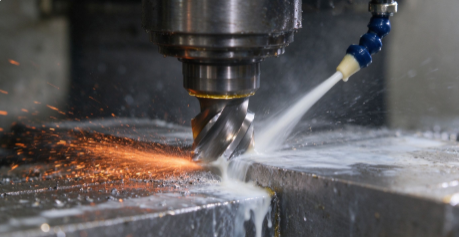
Industry-Wide Operational Challenges
Machining, grinding, rolling and forming operations impose combined cooling, lubrication, anti-rust, cleaning and chip-flushing duty on the working fluid at the same time. In high-speed cutting the tool-work-chip contact zone reaches high local temperature and pressure; water-based and synthetic systems must simultaneously resist emulsion breakdown, foaming, bacterial degradation, tramp-oil contamination and yellow-metal corrosion of machine tool and fixture components. Base fluid or plain emulsifier packages alone cannot satisfy these combined requirements. Without properly selected single-component specialty additives, finished metalworking fluids suffer unstable emulsion structure, excessive foam in high-pressure circulation, poor boundary lubricity at low speed, tool flank wear and cratering, workpiece and fixture rusting, and copper-alloy corrosion in pumps and guideways. Formulators must match individual additives to base-fluid type, water hardness and machining parameters to resolve these metalworking-fluid formulation bottlenecks.
What are Metalworking-Fluid Additives?
Metalworking-fluid additives are functional chemical substances incorporated into water-based, semi-synthetic or straight-oil systems to upgrade the performance of cutting fluids, grinding fluids, rolling oils and forming lubricants. They stabilize emulsification, suppress foam, reduce friction and tool wear, prevent ferrous and non-ferrous corrosion, disperse chips and contaminants, and extend fluid service life in circulation systems.
Core Principles & Fundamental Classification
Special-function single-component metalworking-fluid additives are concentrated individual chemical substances for performance upgrading during fluid compounding. Analogous to paraffin inhibitors modifying wax-crystal morphology without removing paraffin from crude oil: single-component additives cannot replace the intrinsic cooling capacity of water or the hydrodynamic load-carrying capacity of the base fluid. Instead, individual molecules act at interfacial and boundary levels to deliver emulsification, boundary lubricity, extreme-pressure anti-wear, yellow-metal passivation, corrosion inhibition and dispersion effects.
According to functional orientation and representative grades, these additives fall into three main groups:
- Sulfonated-oil emulsifying & boundary-lubricity components: Sulfonated castor oil (OSUM T50 / T80, CAS 8002-33-3) — the classical water-soluble emulsifier and boundary lubricity base for soluble cutting fluids.
- Benzotriazole-derivative metal deactivators: Tolyltriazole derivatives / methylbenzotriazole types (CSUM 4200, CAS 80584-88-9) — water- and glycol-soluble copper corrosion inhibitors.
- Polyether-phosphate-ester multifunctional surfactants: Oleyl alcohol polyether phosphate ester (PMET PE1650, CAS 68909-67-1) — combined lubricant, EP anti-wear agent, corrosion inhibitor, emulsifier and dispersant.
Performance-Driven Working Mechanisms
- Sulfonated castor oil (OSUM T50 / T80): The sulfonated fatty-acid chain combines a strongly hydrophilic sulfonate head with a long oleochemical tail. The molecule behaves as a high-HLB emulsifier that disperses mineral or synthetic oil into stable oil-in-water droplets, while the fatty tail adsorbs on tool and workpiece surfaces to build an oily boundary film that reduces friction at low cutting speed and assists chip flushing and cleaning.
- Tolyltriazole derivatives (CSUM 4200): Water-soluble tolyltriazole molecules chelate with copper ions and adsorb onto copper and copper-alloy surfaces, forming a compact organometallic barrier layer that blocks attack by active sulfur, amines and acidic degradation products, thereby preventing staining, pitting and selective corrosion of brass fixtures, bronze bearings and copper guideways. Being soluble in water and glycol systems, it replaces solid benzotriazole and methylbenzotriazole that require solvent premixing.
- Oleyl polyether phosphate ester (PMET PE1650): Amphiphilic architecture with a polyether chain and a phosphate ester head group. The polyether segment provides emulsifying and dispersing capability plus low-foam tendency; the phosphate head group adsorbs on the freshly cut metal surface and generates a phosphorus-containing tribochemical film at the tool-chip interface, delivering extreme-pressure anti-wear protection under high-pressure contact, while the same group contributes corrosion inhibition and compatibility with hard water.
Consequences of Improper Additive Selection
Inadequate or mismatched single-component selection brings multiple operational risks. Insufficient emulsifier content or wrong HLB balance causes phase separation, oil bleeding and unstable dilution in service. Over-emulsification or mismatched surfactant ratio produces foaming, air entrainment and pump cavitation. Missing copper deactivator grades allow brass and bronze components to stain and corrode, contaminating the fluid and shortening machine-tool life. Insufficient EP-lubricity components accelerate tool flank wear, increase surface roughness and raise power consumption. Poor corrosion-inhibition packages allow workpiece and fixture rusting between operations, causing rework and scrap. Unbalanced dispersion leads to chip agglomeration, sludge and rancidity, forcing premature fluid replacement.
Commercial Additive Portfolio Overview
- OSUM T50 / OSUM T80 (Sulfonated castor oil, CAS 8002-33-3): Water-soluble sulfonated vegetable-oil emulsifier and boundary-lubricity component; supplies emulsion stability, oily film formation and cleaning assistance for soluble cutting fluids and grinding fluids.
- CSUM 4200 (Tolyltriazole derivatives, CAS 80584-88-9): Water- and ethylene-glycol-soluble methylbenzotriazole-type copper corrosion inhibitor and metal deactivator; a convenient liquid alternative to solid benzotriazole / methylbenzotriazole in water-based fluids.
- PMET PE1650 (Oleyl polyether phosphate ester, CAS 68909-67-1): Multifunctional, environmentally friendly surfactant integrating lubrication, extreme-pressure anti-wear, corrosion inhibition, emulsification and dispersion; used in cutting fluids, rolling oils, grinding fluids and general industrial lubrication.
Critical Performance Metrics for Qualified Single-Component Additives
1. High efficiency at low treat rates: Achieve emulsification, EP anti-wear, copper passivation or rust prevention at economical dosage.
2. Broad formulation compatibility: Chemically compatible with mineral, synthetic and ester base fluids, hard water, amine and biocide packages; no precipitation, phase separation or foam surge.
3. Robust environmental stability: Retain functions under high-shear circulation, temperature cycling, tramp-oil ingress and bacterial challenge in sump service.
4. Practical industrial processability: Suitable physical state and solubility for metering and blending in fluid compounding plants, with convenient quality-control verification.
Application Domains & Formulation Selection Guidelines
1. Water-based cutting and grinding fluids: Soluble oils, semi-synthetic and synthetic fluids for turning, milling, drilling, tapping and grinding of ferrous and non-ferrous metals.
2. Rolling and forming lubricants: Cold-rolling oils, drawing and stamping fluids requiring combined lubricity and EP protection.
3. Associated supporting systems: Industrial lubricants and greases sharing the same additive platform.
Selection guidance:
- Use OSUM T50 / T80 as the emulsifier and boundary-lubricity base when building soluble-oil emulsions and improving finish at low speed.
- Add CSUM 4200 whenever copper, brass or bronze fixtures, guideways or workpieces contact the fluid, or when a liquid, water-soluble replacement for solid benzotriazole is needed.
- Adopt PMET PE1650 for formulations that must combine lubricity, extreme-pressure anti-wear, corrosion inhibition and emulsification in one multifunctional component, especially rolling oils and hard-water systems.
Concluding Remarks
Reliable metalworking-fluid performance relies not only on base-fluid quality but also on rational screening of single-component specialty additives in compounding. Sulfonated-castor-oil emulsifiers and boundary-lubricity components, water-soluble tolyltriazole deactivators and polyether-phosphate-ester multifunctional surfactants jointly deliver stable emulsification, low-foam circulation, tool-life protection, yellow-metal passivation and rust prevention. Correct grade selection helps formulators satisfy cooling, lubrication, cleaning and stable-operation requirements of modern machining processes.
Contact UNPChemicals technical-sales team for datasheets, formulation recommendations and custom-grade support for your metalworking-fluid projects.