 WhatsApp
 sales@unpchemicals.com
 +86 16638830202
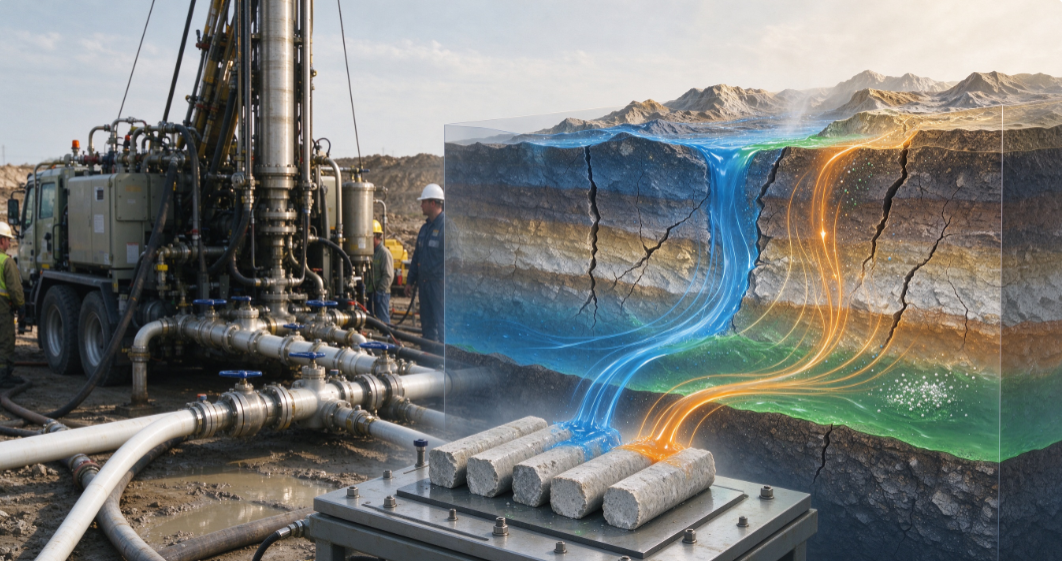
Industry-Wide Operational Challenges
Oil-gas reservoirs frequently suffer permeability impairment caused by formation-blocking substances, restricting hydrocarbon flow and reducing well productivity. Conventional acidizing treatments face practical obstacles including short acid-rock contact duration, uneven acid distribution across heterogeneous formations, excessive acid leak-off and unintended formation damage. Without specialized stimulation-fluid additive packages, operators obtain insufficient stimulation effect, waste acid reagents and fail to unlock production potential from low-permeability zones. Formulators require tailored functional additives to address these reservoir-treatment bottlenecks.
Core Principles & Fundamental Classification
Well-stimulation additives are specialty oil-field chemical components designed to modify physicochemical behaviours of acidizing treatment fluids. Analogous to paraffin inhibitors modifying wax-crystal morphology without removing paraffin from crude oil: well-stimulation additives do not replace the intrinsic dissolving capacity of acid-based treatment fluids. Instead, they act at molecular and interfacial levels to tune fluid viscosity, oil-water interfacial tension and in-situ flow distribution inside heterogeneous reservoirs.
They fall into three primary application groups: - Acid viscosifiers: Viscosity-modifying components to improve acid retention within target formation zones. - Acid emulsifiers: Interfacial surfactants for constructing stable acid-oil-water emulsified treatment systems. - Diverting agents represented by viscoelastic-surfactant grades: Function-specific additives for autonomous acid-flow redistribution amid permeability-varied strata.
Performance-Driven Working Mechanisms
Different additive categories realize performance improvement through distinct molecular pathways: - Acid viscosifiers: Adjust bulk acid-fluid viscosity to enhance in-formation retention capacity. Extended contact time between acid and rock enables more thorough dissolution of formation plugging materials, unclogging hydrocarbon flow channels and boosting reservoir permeability and output. - Acid emulsifiers: Lower oil-water interfacial tension and facilitate homogeneous mixing among acid, oil and water phases to build stable emulsified fluid systems. Such optimized fluid properties mitigate acid leak-off into non-target zones and mitigate over-exposure-induced formation harm, safeguarding both efficiency and operational safety for acidizing jobs. - **Viscoelastic-surfactant-based diverting agents: VES-type additives respond autonomously to formation pressure and permeability contrasts. They redirect treatment fluid toward low-permeability intervals to realize homogeneous acidizing across heterogeneous reservoirs, fully tapping untapped formation productive potential.
Consequences of Improper Additive Selection
Inadequate or mismatched additive selection brings multiple operational risks. Insufficient viscosifier loading results in rapid acid dissipation and overly-short acid-rock contact time, yielding poor de-plugging and stimulation outcomes. Poor-quality acid emulsifiers fail to sustain stable emulsion systems, triggering uncontrolled acid leak-off and unexpected reservoir impairment. Improper diverting-agent performance causes preferential acid channeling into high-permeability streaks, leaving low-permeability intervals untreated. All these failures lead to sub-par well productivity return on stimulation investment and increase overall field-development expenditures.
Commercial Additive Portfolio Overview
- ACMET™ Series: Acid viscosifiers and acid emulsifier product grades formulated for acidizing stimulation fluids. - VESMET™ Series: Viscoelastic-surfactant diverting agents for autonomous flow-redistribution during heterogeneous-reservoir acidizing treatments. The portfolio centers on viscoelastic-surfactant technology alongside complementary acid-treatment chemical families to support diversified well-stimulation design requirements.
Critical Performance Metrics for Qualified Additives
Following the unified evaluation framework across UNPChemicals technical review series, high-quality well-stimulation additives shall meet four core performance metrics:
1. High efficiency at low treat rates: Achieve target viscosity build-up, emulsion stabilization or flow-diversion performance under economically feasible additive dosage.
2. Broad formulation compatibility: Maintain stable performance when blended with mineral acids and other stimulation-fluid components without undesirable precipitation or phase separation.
3. Robust environmental stability: Retain core functionality under reservoir temperature, salinity and formation-fluid contamination conditions.
4. Practical industrial processability: Exhibit favourable pumping and mixing characteristics for on-site field stimulation operation workflows.
Application Domains & Formulation Selection Guidelines
These additive systems serve multiple oil-gas reservoir-stimulation segments:
1. Conventional acidizing operations: Remove near-wellbore formation blockages, restore and enhance reservoir permeability.
2. Heterogeneous-formation acidizing treatments: Realize uniform stimulation across intervals with large permeability disparities.
3. Environment-conscious field-development projects: Support low-impact, high-efficiency stimulation schemes aligned with green-production targets.
Formulators need to evaluate reservoir heterogeneity, formation temperature, mineral composition and environmental-protection requirements before final grade selection: - Deploy acid viscosifier grades when extended acid-rock contact and improved formation retention are primary objectives. - Select ACMET™ acid emulsifier formulations for scenarios requiring stable acid-containing emulsified fluid systems and controlled acid leak-off. - Adopt VESMET™ diverting agents for heterogeneous reservoirs, to achieve uniform acidizing over mixed high-/low-permeability zones.
Concluding Remarks
Successful well-stimulation acidizing performance depends not only on the acid-dissolving capacity of base treatment fluids but heavily upon rationally compounded functional-additive packages. Appropriately selected viscosifiers, emulsifiers and viscoelastic-surfactant diverting agents optimize viscosity, interfacial properties and in-situ fluid distribution, unlocking production potential from complex reservoirs while satisfying modern industry demands for high-efficiency and environmentally-friendly oil-gas exploitation.
Contact UNPChemicals technical-sales team for datasheets, formulation recommendations and custom-grade support for your specific well-stimulation projects.