 WhatsApp
 sales@unpchemicals.com
 +86 16638830202
- January 28, 2026
MSAIL 8550 demonstrates outstanding performance in CVJ grease
Introduction
The Constant Velocity Joint (CVJ), a critical component in front-wheel-drive, all-wheel-drive, and modern electric vehicle drivetrains, transmits torque at varying angles with minimal speed fluctuation. The grease packed within this joint is its sole, permanent lubricant, tasked with a formidable duty. It must function under intense Hertzian contact pressures, manage a complex mix of rolling and sliding motion, withstand temperatures from winter cold starts to high operational heat, and resist degradation from water and abrasive contaminants. Failure, manifested as wear, pitting, shudder, or ultimately catastrophic joint seizure, is often traceable to lubricant insufficiency. Consequently, formulating a CVJ grease requires additives that deliver robust, multi-faceted, and long-lasting performance under these combined stresses.
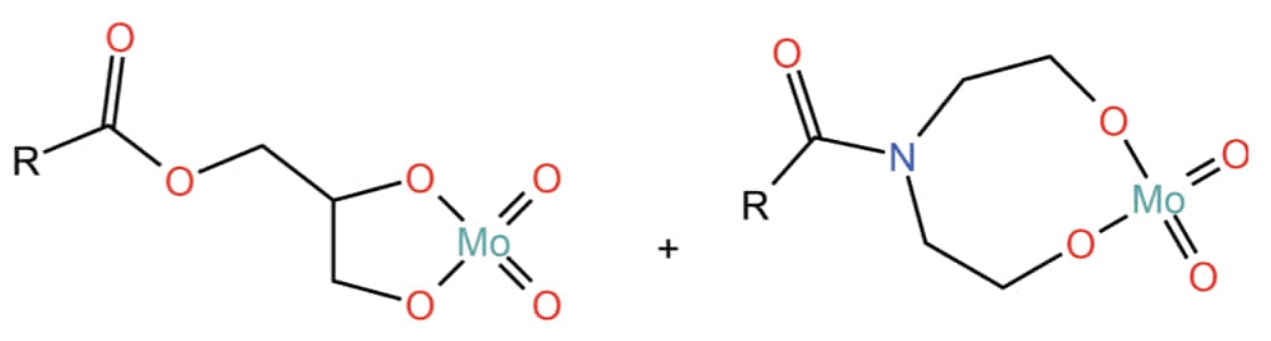
MSAIL 8550(CAS 445409-27-8), an organomolybdenum complex, is recognized for demonstrating "outstanding performance in CVJ grease." This claim points to its efficacy not in a simple fluid but within a complex, semi-solid lubricant system subjected to the aforementioned severe conditions. This paper explores the mechanistic rationale behind this performance. We will dissect how the core functionalities of MSAIL 8550—its friction modification, synergistic anti-wear action, and oxidative stability—are uniquely suited to meet and mitigate the specific challenges inherent to CVJ lubrication. The analysis will demonstrate that MSAIL 8550 is not merely compatible with grease but is a critical enabler of high-performance formulations that ensure driveline smoothness, durability, and reliability.
I. The CVJ Grease Environment: A Convergence of Challenges
To appreciate the value of MSAIL 8550, one must first understand the specific tribological demands of a CVJ:
Extreme Pressure (EP) and Shock Loading: The ball-and-groove or tripod design creates very high localized contact stresses, demanding exceptional anti-wear and extreme pressure protection to prevent surface distress like micropitting and scuffing.
High Sliding/Rolling Friction: The motion within the joint involves significant sliding friction, which can lead to stick-slip phenomena, manifested as shudder or vibration during acceleration, especially at high torque angles.
Thermal and Mechanical Shear: Grease is subjected to continuous mechanical working and heat, which can cause oil bleeding, thickener breakdown, and additive depletion, leading to grease consistency failure and loss of lubricity.
Oxidation and Contamination: High operational temperatures accelerate oil oxidation within the grease, while seals are imperfect, allowing water and road debris ingress.
II. How MSAIL 8550 Addresses Core CVJ Failure Modes
The multifunctional profile of MSAIL 8550 provides targeted solutions to these challenges.
1. Anti-Shudder and Friction Control (Addressing Sliding Friction):
Shudder, a low-frequency vibration felt during acceleration, is a critical NVH concern directly linked to unstable friction in the CVJ.
Mechanism: MSAIL 8550's ability to form a low-shear-strength molybdenum disulfide (MoS₂) or related solid lubricant film on contact surfaces is crucial.
Benefit: This film provides a consistent, stable coefficient of friction under the mixed/boundary lubrication regime dominant in CVJs. By preventing the stick-slip cycles that cause shudder, it ensures smooth torque transmission and enhances driver comfort. Its "S/P Free" nature ensures this friction control is achieved without the risk of corrosive wear to the joint's precision surfaces.
2. Enhanced Wear and Micro-Pitting Protection (Addressing EP/Shock Loads):
The synergy of MSAIL 8550 with sulfur-containing EP additives, often used in CVJ grease, is directly applicable here.
Mechanism: As previously established, MSAIL 8550 synergizes to form a tenacious, composite boundary film (containing Mo, S, P, Fe). This film is more resistant to removal under high stress than films formed by traditional EP additives alone.
Benefit: This synergy offers superior protection against adhesive wear, polishing, and most importantly, micropitting—a surface fatigue phenomenon common in high-stress rolling/sliding contacts. The tougher, more cohesive composite film better distributes load and resists surface fatigue initiation.
3. Contribution to Grease Stability and Longevity (Addressing Thermal/Shear Degradation):
A grease must maintain its structure and lubricating properties over time.
Oxidation Stability: The excellent antioxidant synergy of MSAIL 8550 with aromatic amines protects the base oil within the grease from oxidative thickening and varnish formation. This preserves the grease's original consistency and prevents the formation of hard, abrasive deposits within the joint.
Film Persistence: The solid lubricant films generated by MSAIL 8550 are inherently more stable under thermal stress than purely organic friction modifier layers. They are less likely to desorb or decompose, providing more durable surface protection even as the grease ages or is worked.
4. Performance Under Contaminated Conditions:
The in situ generated solid lubricant films can offer a degree of protection even in the presence of minor abrasives or moisture, helping to maintain a protective barrier on the metal surfaces.
III. Practical Value and Formulation Impact
The incorporation of MSAIL 8550 into CVJ grease formulations delivers tangible benefits that align with automotive OEM demands for higher performance and longer life:
Extended Service Life and Warranty Fulfillment: By providing more durable wear protection and maintaining grease integrity, it supports the industry trend towards sealed-for-life CVJ units and extended warranty periods.
Enabling Higher Torque and Smaller Designs: Its superior EP performance allows joints to handle the increased torque of modern high-output engines and electric motors, potentially enabling more compact, lightweight joint designs.
Meeting Stringent OEM Specifications: It directly contributes to passing rigorous performance tests for shudder, wear, and durability that are standard in CVJ grease approval processes.
Improving EV Driveline Efficiency: In electric vehicles, where driveline whine and efficiency are paramount, the stable, low-friction performance of MSAIL 8550 contributes to quiet operation and minimal energy losses in the drivetrain.
Conclusion
The outstanding performance of MSAIL 8550 in CVJ grease is a direct consequence of its tailored multifunctionality meeting a uniquely demanding set of tribological requirements. Its capacity for stable friction modification combats shudder, its synergistic wear protection guards against micropitting and fatigue, and its contribution to oxidative stability ensures grease longevity. Rather than being a simple additive, MSAIL 8550 acts as a performance integrator within the grease formulation, simultaneously addressing the mechanical, chemical, and thermal challenges of the CVJ environment. Therefore, it establishes itself as a critical technological component for developing advanced CVJ greases that deliver the smoothness, durability, and reliability required by the next generation of automotive drivetrains, from high-performance internal combustion engines to high-torque electric vehicles.