 WhatsApp
 sales@unpchemicals.com
 +86 16638830202
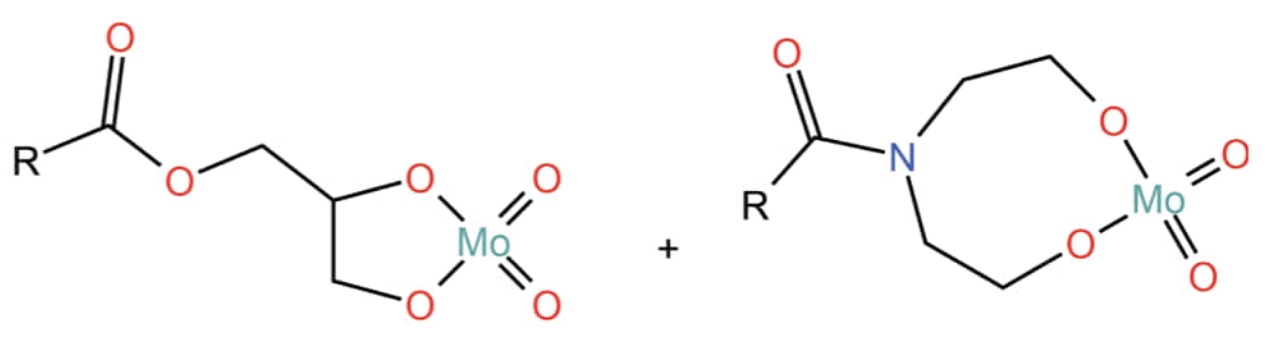
MSAIL 8550 exhibits excellent synergistic antioxidant effects with aromatic amine antioxidants
Introduction
Oxidative degradation remains a primary threat to the performance and lifespan of lubricating oils, leading to increased viscosity, acid formation, sludge, and harmful varnish. To combat this, lubricant formulators rarely rely on a single antioxidant; instead, they design synergistic packages where the combined effect of two or more antioxidants exceeds the sum of their individual contributions. One of the most strategically important synergies is that between metal-containing species and organic radical scavengers. MSAIL 8550, an organomolybdenum complex, is specifically noted for exhibiting "excellent synergistic antioxidant effects with aromatic amine antioxidants." This declared synergy is not a minor footnote but a core aspect of its multifunctionality. This paper delves into the mechanistic foundation of this partnership, explaining how MSAIL 8550 and aromatic amines interact on a molecular level to create a superior defense system. By understanding this synergy, we can appreciate its pivotal role in achieving the extended drain intervals, superior thermal stability, and exceptional deposit control required by today's high-performance lubricants.
The Players: Aromatic Amines and MSAIL 8550
To understand the synergy, we must first define the individual roles of the key components.
1. Aromatic Amine Antioxidants:
These are classic secondary antioxidants or radical scavengers. Examples include alkylated diphenylamines and phenyl-alpha-naphthylamine. Their primary mode of action is to donate a hydrogen atom from their N-H group to a propagating radical, most effectively a peroxy radical (ROO•). This reaction neutralizes the radical, forming a stable product and a nitrogen-centered aminyl radical (Ar2N•). While this aminyl radical is relatively stable, it eventually becomes consumed, marking the depletion of the antioxidant.
2. MSAIL 8550(CAS 445409-27-8) – The Synergist:
As an organomolybdenum complex, MSAIL 8550 is postulated to function primarily as a hydroperoxide decomposer. It is hypothesized to catalytically convert hydroperoxides (ROOH)—unstable intermediates in the oxidation chain—into non-radical, stable products like alcohols. By itself, this is a valuable function, but its true power is unlocked in combination.
The Mechanism of Synergy: A Hypothesized Cooperative Cycle
The "excellent synergy" suggests an interaction more profound than independent, parallel action. The prevailing hypothesis involves a cooperative or regenerative cycle that enhances the efficiency of the amine.
1. Complementary Attack on the Oxidation Chain:
The oxidation propagation cycle has two key targets: the peroxy radicals (ROO•) and the hydroperoxides (ROOH). Amines excel at scavenging ROO•, while MSAIL 8550 targets ROOH. By attacking the chain at two different, consecutive points, they create a more comprehensive defense, effectively "pinching" the propagation process.
2. The Regeneration Hypothesis (A Key Concept):
A particularly powerful model suggests that MSAIL 8550 may actively regenerate the active amine antioxidant.
Step 1: An aromatic amine (Ar2NH) donates its hydrogen to a peroxy radical, forming a stable hydroperoxide (ROOH) and an aminyl radical (Ar2N•).
Step 2: The molybdenum species in MSAIL 8550 catalyzes the decomposition of the newly formed ROOH (and others) into non-radical products.
Step 3: Crucially, in this process, the molybdenum intermediate may interact with the aminyl radical (Ar2N•), reducing it back to the active amine (Ar2NH).
3. Net Result of the Synergy:
Extended Antioxidant Life: The amine is effectively "recycled," dramatically slowing its depletion rate. This means a given concentration of amine provides protection for a much longer period.
Suppressed Hydroperoxide Accumulation: By rapidly decomposing ROOH, MSAIL 8550 prevents these species from building up and undergoing homolytic cleavage to produce new radicals (RO•, •OH), which would otherwise overwhelm the amine.
Enhanced Overall System Stability: This cooperative cycle results in a significantly extended oxidation induction period for the lubricant. The rate of formation of acidic by-products and polymerization precursors is drastically reduced.
Practical Implications and Performance Benefits
This molecular-level synergy translates directly into measurable and critical performance advantages across a wide range of applications:
1. Fundamental Lubricant Property Enhancement:
Extended Oxidation Life: Oils formulated with this synergistic pair demonstrate superior performance in oxidation stability tests, a prerequisite for any extended drain interval.
Superior Deposit and Varnish Control: By drastically reducing the pool of oxygenated polymers and heavy ends—the raw materials for deposits—this synergy is the direct mechanism behind MSAIL 8550's ability to reduce high-temperature deposit formation. This leads to cleaner engines, turbines, and hydraulic systems.
2. Application-Specific Advantages:
Modern Engine Oils: In turbocharged gasoline direct injection (TGDI) engines, this synergy helps combat low-speed pre-ignition (LSPI) by maintaining piston crown and ring groove cleanliness. It also protects against oil thickening and sludge in severe service.
Industrial and Hydraulic Oils: For systems requiring long fluid life and exceptional cleanliness (e.g., gas turbines, precision hydraulics), the synergy minimizes varnish formation on critical components like servo valves and bearings, preventing costly unplanned downtime.
Formulation Efficiency: It allows formulators to achieve stringent OEM specifications for oxidation stability and deposit control often with more optimized, and potentially more cost-effective, additive treat rates.
Conclusion
The excellent synergistic antioxidant effect between MSAIL 8550 and aromatic amine antioxidants represents a cornerstone of its multifunctional performance. This synergy is not merely additive but is hypothesized to be cooperative and potentially regenerative, creating an antioxidant network of superior efficiency and endurance. By combining radical scavenging with hydroperoxide decomposition in a reinforcing cycle, this partnership delivers a profound extension of lubricant life and a fundamental suppression of deposit-forming chemistry. Therefore, MSAIL 8550's value in a formulation is significantly magnified by its synergistic relationship with amines. It functions as a force multiplier for the antioxidant system, making it an indispensable component for developing advanced lubricants that meet the dual challenges of extended durability and impeccable cleanliness in the face of severe oxidative stress. Understanding and leveraging this specific synergy is key to formulating next-generation fluids for the most demanding applications.