 WhatsApp
 sales@unpchemicals.com
 +86 16638830202
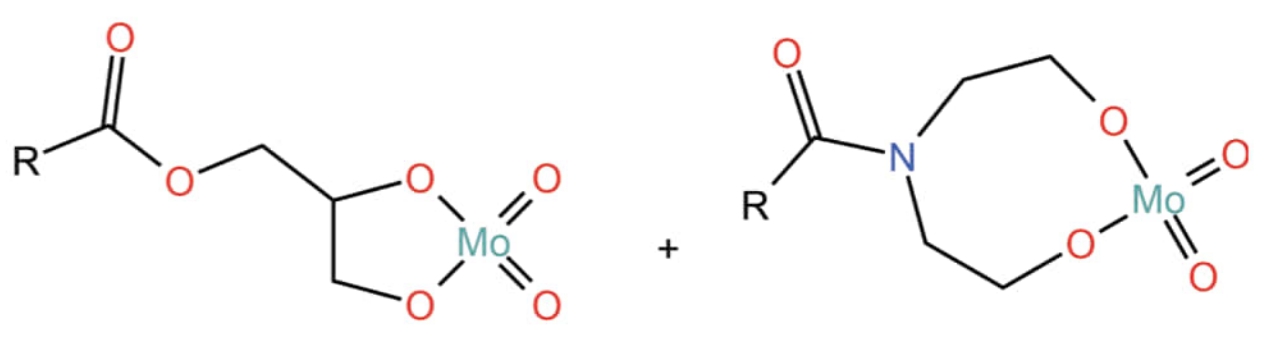
MSAIL 8550 effectively controls the oxidative degradation of lubricating oils, reducing the formation of high-temperature deposit
Introduction
The operational lifespan and functional efficacy of lubricants are inextricably linked to their resistance to oxidative degradation. Under the combined assault of heat, atmospheric oxygen, and catalytic metal surfaces, lubricant hydrocarbons undergo autoxidation, initiating a cascade of chemical changes. This process not only alters the oil's fundamental properties—increasing viscosity and total acid number—but also generates insoluble, high-molecular-weight products. These products manifest as sludge within the oil bulk and, more critically, as tenacious varnish and carbonaceous deposits on hot metal surfaces such as piston rings, turbocharger components, and hydraulic valve bodies. Such deposits impair heat transfer, cause mechanical sticking, accelerate wear, and are a primary contributor to premature system failure. Therefore, advanced antioxidant strategies are essential not merely to preserve base oil integrity but to actively prevent the genesis of these debilitating deposits.
MSAIL 8550(CAS 445409-27-8), an organomolybdenum complex, is explicitly recognized for its ability to "effectively control the oxidative degradation of lubricating oils, reducing the formation of high-temperature deposits." This attribute positions it beyond a conventional friction modifier, highlighting its role as a multifunctional additive with critical antioxidative and deposit-control properties. This paper explores the scientific rationale underlying this capability. We will delineate the chemical mechanisms by which MSAIL 8550 intervenes in the oxidation pathway, with particular emphasis on its synergistic behavior within a formulated antioxidant system. The analysis will connect these molecular-level actions to their direct practical benefits for lubricant performance and equipment reliability.
I. The Oxidative Pathway to Deposit Formation
A mechanistic understanding of MSAIL 8550's function begins with the classic autoxidation sequence:
Initiation: External energy inputs (thermal, mechanical) and metal catalysts generate reactive alkyl radicals (R•) from lubricant molecules.
Propagation: These radicals rapidly react with oxygen to form peroxy radicals (ROO•), which propagate the chain by abstracting hydrogen from new substrate molecules, producing hydroperoxides (ROOH) and new radicals. Hydroperoxides are unstable and decompose, often into additional radical species (alkoxy, hydroxy radicals), thereby accelerating the process.
Termination and Polymerization: Radical recombination terminates chains. However, the oxygenated products—acids, ketones, aldehydes—readily undergo condensation and polymerization reactions.
Deposit Genesis: The resulting high-polarity, high-molecular-weight polymers exceed their solubility limit in the oil. They agglomerate (often with soot in engines) to form low-temperature sludge or, upon contact with hot surfaces, undergo further pyrolysis and dehydrogenation, baking on as hard, insoluble high-temperature varnish and deposits.
II. The Antioxidant Mechanism of MSAIL 8550
MSAIL 8550 disrupts this degenerative cycle through two principal, interconnected mechanisms that target the propagation stage.
1. Primary Function: Hydroperoxide Decomposition
Unlike radical-scavenging antioxidants (e.g., hindered phenols), certain organometallic complexes are proficient as hydroperoxide decomposers. MSAIL 8550 is hypothesized to operate within this category.
Mechanistic Rationale: The molybdenum center in MSAIL 8550 may catalyze the non-radical decomposition of hydroperoxides (ROOH) into stable products such as alcohols, rather than allowing their unimolecular decomposition into radical fragments.
Direct Consequence: By effectively scavenging ROOH—the pivotal branching agents in the oxidation chain—this action directly retards the rate of chain propagation. This preemptive step significantly reduces the pool of reactive intermediates available to form the acidic and polymeric precursors to sludge and varnish.
2. Synergistic Amplification with Aromatic Amine Antioxidants
The documented "excellent antioxidant synergism" with aromatic amines represents the most potent aspect of MSAIL 8550's antioxidant profile.
Complementary Roles: Aromatic amines (e.g., alkylated diphenylamines) are exceptional scavengers of peroxy radicals (ROO•), acting as chain-breaking donors.
Synergistic Mechanism: The combination with MSAIL 8550 is proposed to establish a regenerative or complementary cycle. One plausible pathway involves the molybdenum species facilitating the regeneration of the active amine from its oxidized radical form, or alternatively, the molybdenum decomposing hydroperoxides that would otherwise consume the amine. This interaction creates a more efficient and durable antioxidant system.
Net Effect: This synergy produces an antioxidant network whose efficacy surpasses the additive effect of its individual components. It dramatically extends the oxidation induction period, thereby severely limiting the cumulative yield of deposit-forming oxidation products over the lubricant's operational life.
3. The Direct Link to Reduced Deposit Formation
Through these mechanisms, MSAIL 8550 achieves deposit control at its source:
Precursor Suppression: The total mass of oxygenated polymers and heavy ends is drastically reduced.
Enhanced System Stability: The overall oxidative stability of the formulated fluid is elevated, decreasing the rate of thermal degradation on hot surfaces.
Ancillary Benefits: Its organometallic nature may contribute to mild metal surface passivation, further slowing the initiation of oxidation.
III. Application Implications and Practical Value
The deposit-control capability conferred by MSAIL 8550's antioxidant mechanism has profound implications across numerous applications:
Engine System Cleanliness: In internal combustion engines, it is instrumental in preventing carbonaceous deposits in piston ring lands and grooves, on turbocharger variable geometry mechanisms, and around oil control rings. This maintains compression, prevents sticking, and mitigates risks such as low-speed pre-ignition (LSPI) in modern downsized gasoline engines.
Enabling Extended Drain Intervals: By providing superior control over oxidation and its by-products, lubricants formulated with MSAIL 8550 maintain their protective properties and cleanliness for longer durations, supporting the development of extended drain service fills for both automotive and industrial oils.
Reliability in Precision Systems: In hydraulic systems, gas turbines, and compressors, the inhibition of varnish is critical. MSAIL 8550 helps maintain clean servo valves, bearings, and control surfaces, preventing the erratic operation and failures associated with deposit buildup.
Formulation Strategy: It provides formulators with a potent tool to meet stringent industry and OEM specifications for deposit control (e.g., TEOST, Panel Coker limits) and oxidation stability (e.g., RPVOT). Its multifunctionality allows for more efficient and balanced additive packages.
Conclusion
The ability of MSAIL 8550 to control oxidative degradation and suppress high-temperature deposit formation is rooted in a sophisticated, dual-mode antioxidant mechanism. Its proposed role in catalytically decomposing hydroperoxides, powerfully amplified through synergy with aromatic amine antioxidants, establishes a highly effective defense against the autocatalytic oxidation chain. By intervening at the critical propagation stage, it fundamentally reduces the production of the polymeric precursors responsible for sludge and varnish. This mechanistic action translates directly into tangible performance benefits: enhanced lubricant service life, superior system cleanliness, and improved operational reliability. Consequently, MSAIL 8550 is established not merely as an additive but as a strategic, multifunctional component essential for formulating next-generation lubricants capable of meeting the escalating demands of efficiency, durability, and cleanliness in advanced mechanical systems.